
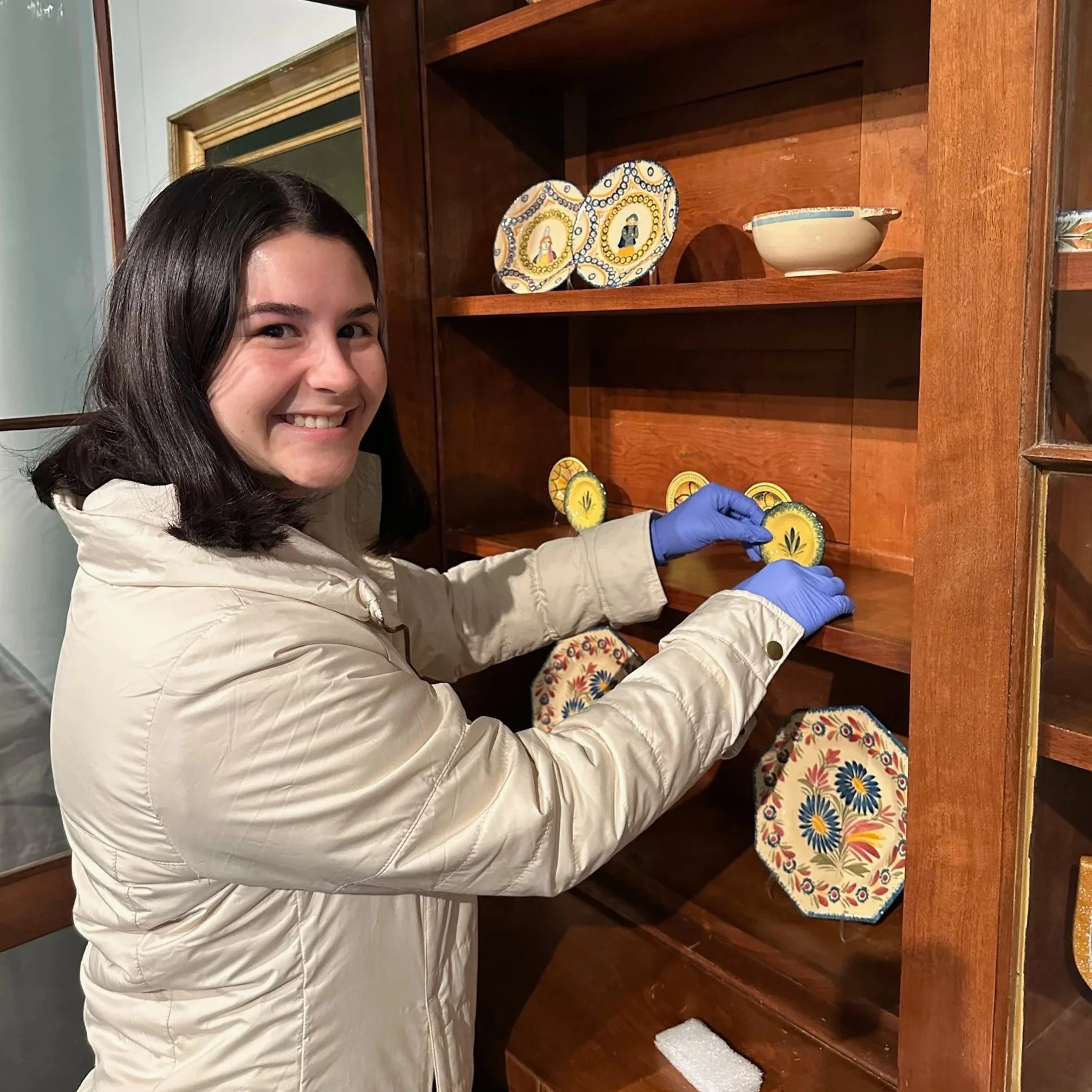
Art History in Action: Meet LSU Graduate Student Sarah Ducote
Can you tell us a little about yourself and what drew you to art history at LSU?
Hi, my name is Sarah Ducote! Since I was a little girl, history has always been my favorite subject. On weekends, my mom would take me to museums around Louisiana, and I think those trips were the first times I became interested in art. In college, my major was History with a minor in Art History. My classes were amazing, and the professors really inspired me. During my last year at LSU, I studied abroad in Florence, Italy, through the university. Being able to see some of the greatest artworks in history was truly a life-changing moment for me, and it ultimately led me to pursue an MA in Art History at LSU. From the faculty to studying abroad, LSU has provided me with many opportunities that have shaped the course of my life and career.
You’re currently a curatorial graduate assistant at the LSU Museum of Art. What has that experience been like so far? How has working at the LSU Museum of Art influenced your goals, and do you see yourself pursuing a museum career after graduate school?
Working at the LSU Museum of Art has been amazing! Michelle Schulte, the chief curator, has been mentoring me for the last few months and has made sure I learn as much as possible about curatorial work, registrar responsibilities, installations, and how the entire team works together to exhibit art in the galleries. With her guidance, I’ve gained a well-rounded understanding of the curatorial process and how much thought, collaboration, and problem-solving go into each exhibition. This experience has really shaped my goal of understanding how museums operate, and it’s helped me realize that I definitely see myself pursuing a museum career after graduate school.
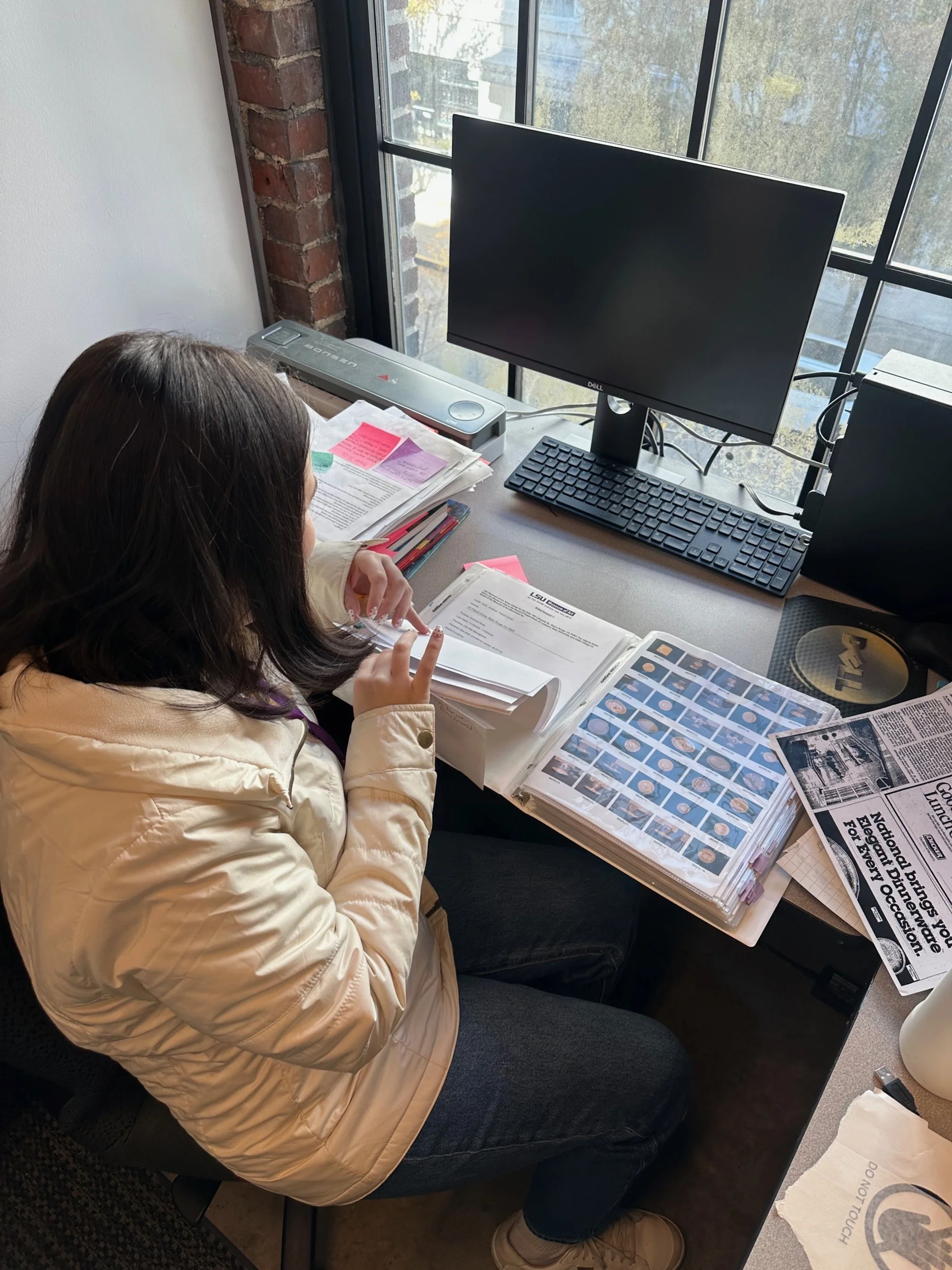

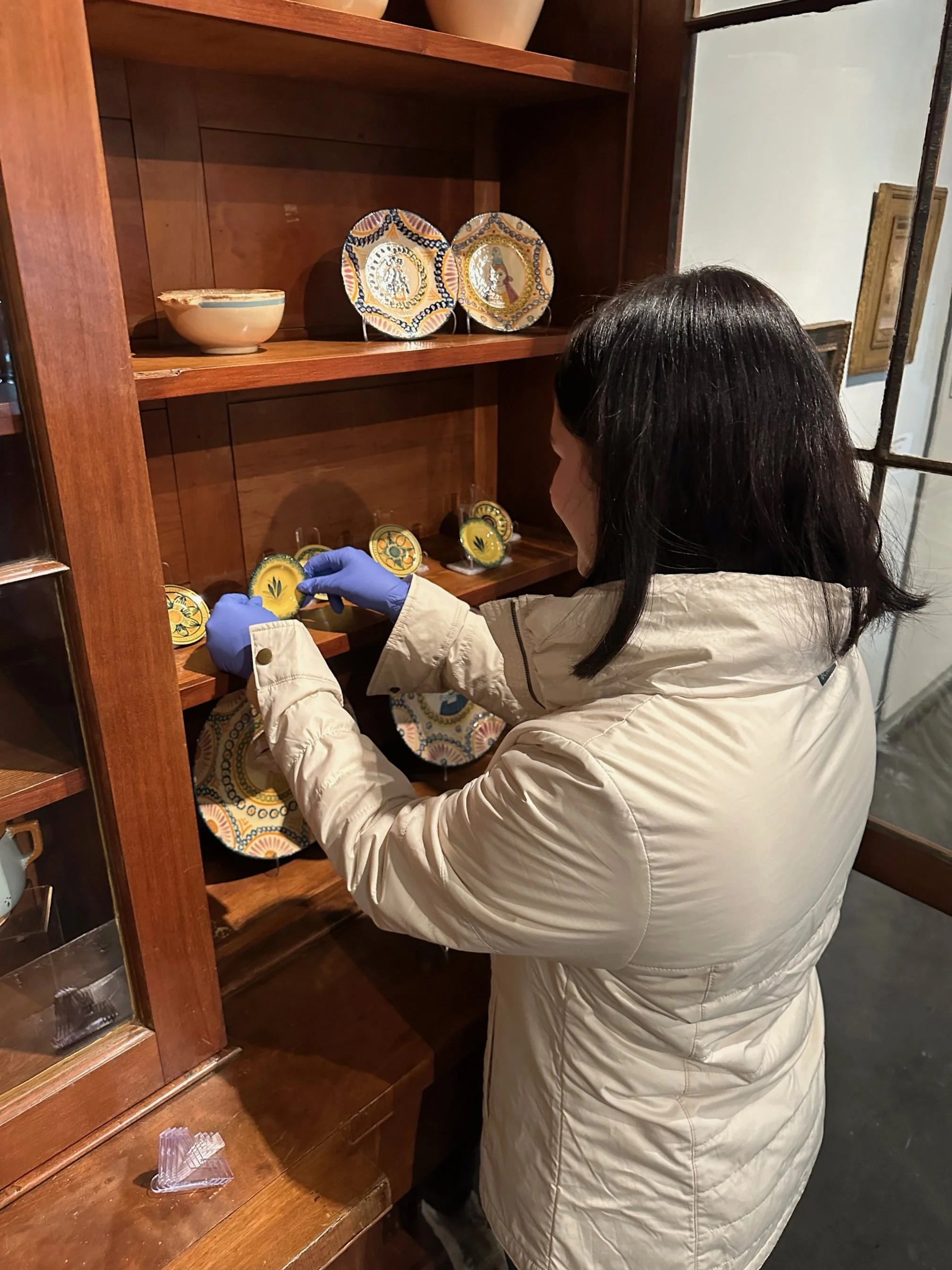
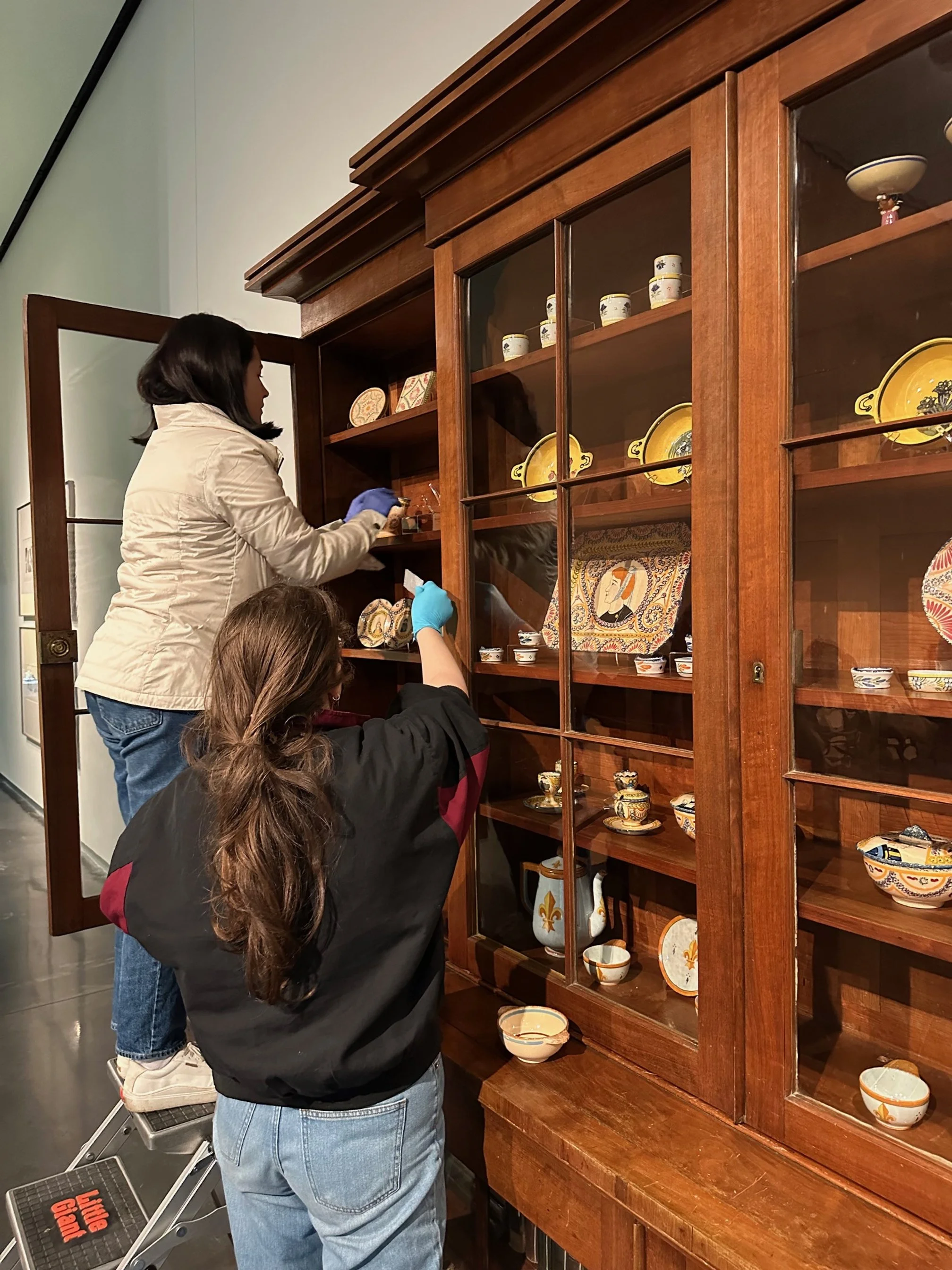
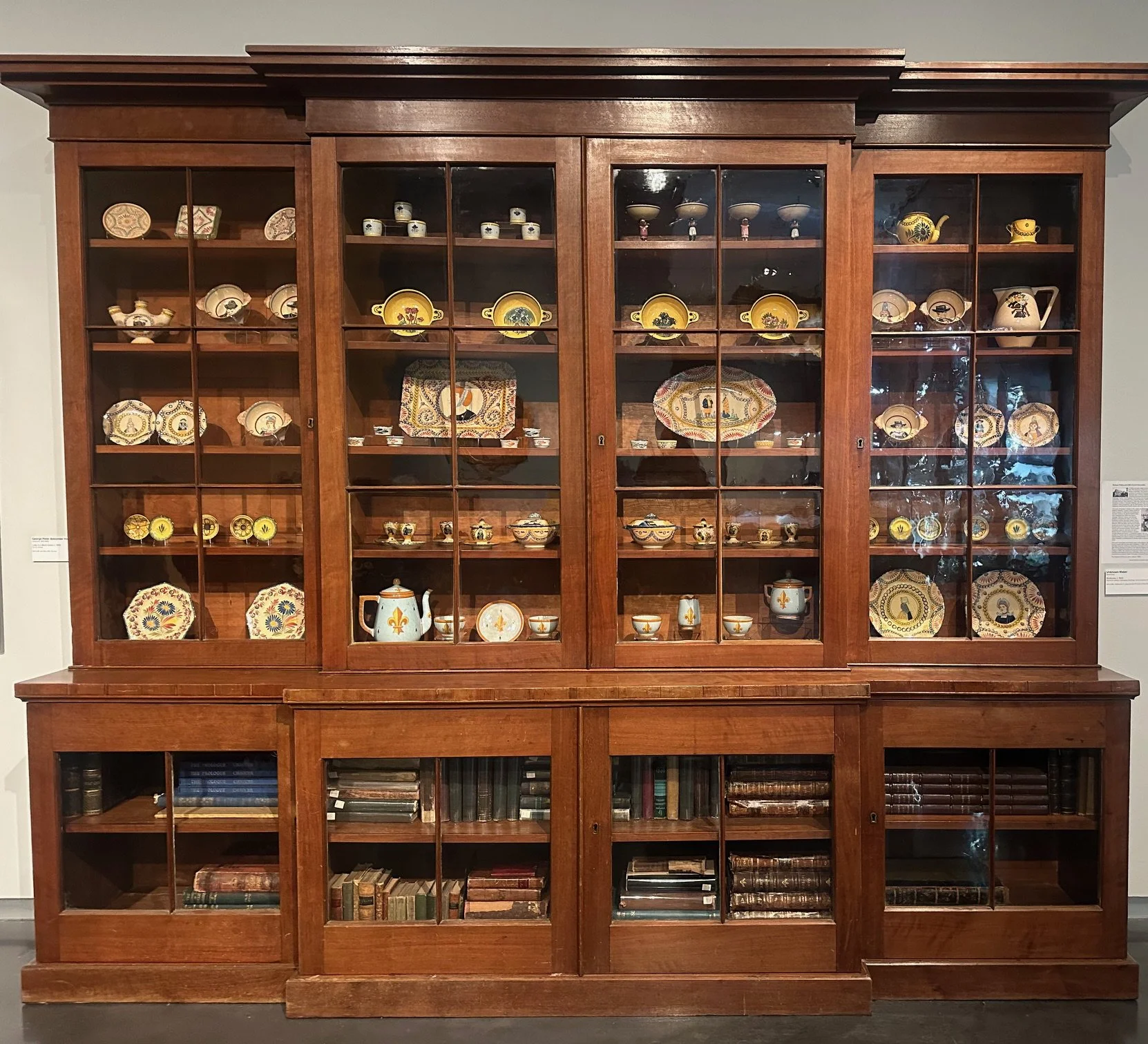
You recently curated and installed Quimper Pottery in the LSU Museum of Art’s Decorative Arts Gallery, and curated a selection of Newcomb Pottery from the museum’s permanent collection for display at the LSU Ogden Honors College in the French House. How did this project come together, and what excited you most about it?
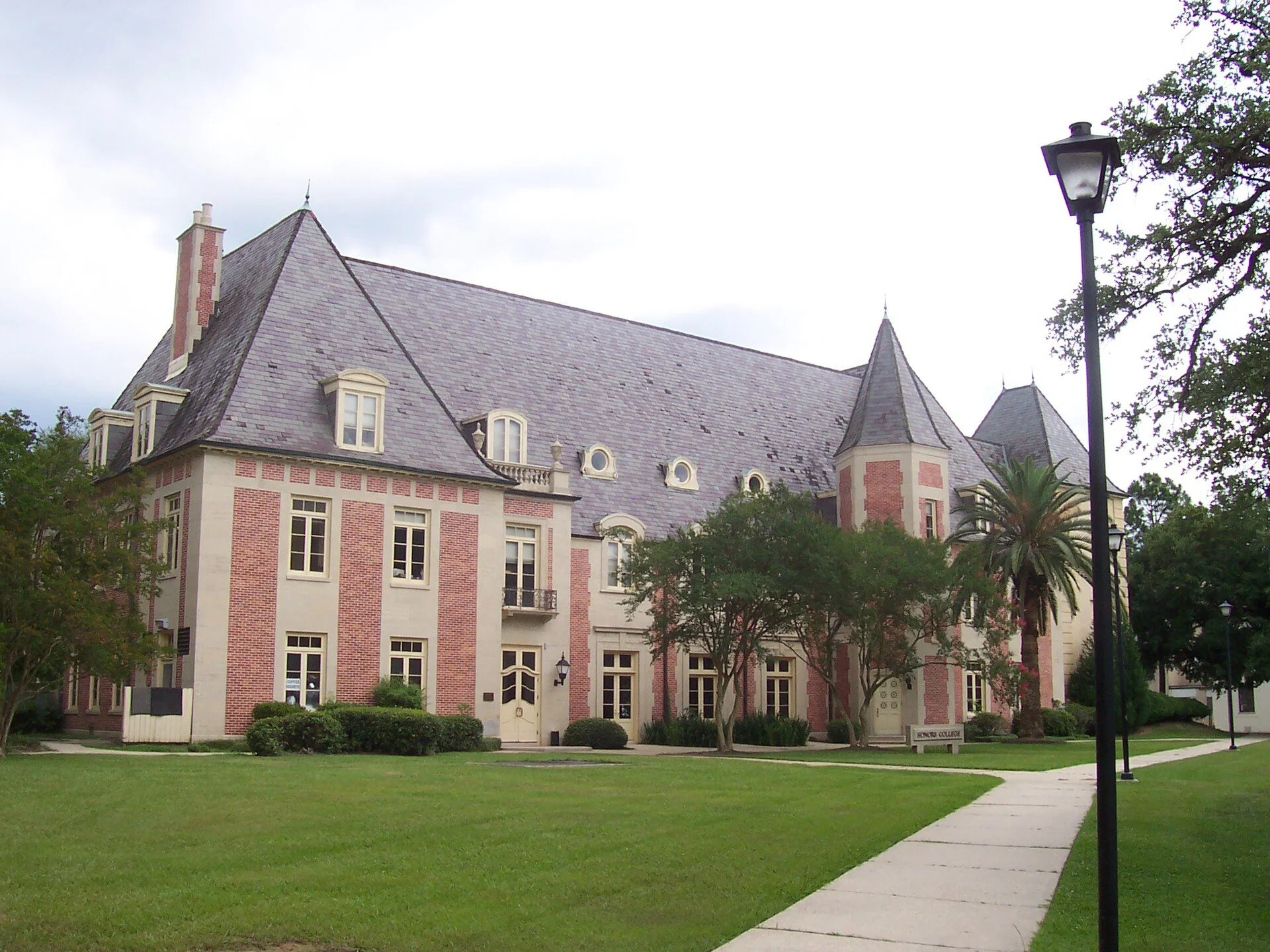
The French House located on LSU’s campus. The Ogden Honors College is made up of the French House and Laville Honors House residential college.
Yes! Michelle Schulte, the chief curator of the LSU Museum of Art, asked me to team up with Dean Jonathan Earle at LSU’s French House to arrange a loan of Quimper pottery from the French House to the museum and a loan of Newcomb pottery from the museum to the French House. The French House has such a wonderful history on campus, and the Quimper pottery is a representation of how much LSU has grown over the century. The idea was to modernize the present-day Ogden Honors College by installing Newcomb pottery and a few paintings by Knute Heldner, all selected from the museum’s collection. The goal of the project was to incorporate Louisiana art at the French House while highlighting LSU’s history at the museum. Michelle trusted me to research, curate, and install both the Newcomb pottery on campus and the Quimper pottery at the museum. As a graduate student, this was the perfect opportunity to learn about the curation and loan process. I collaborated closely with the curatorial team throughout the installations to bring the displays to life. I was most excited about installing because I had the creative freedom to determine the layout of the pottery. It was a lot of work, but I am so happy with the outcome and hope visitors enjoy the ceramics at both locations.
When you began working on these installations, what was your curatorial and design process like?
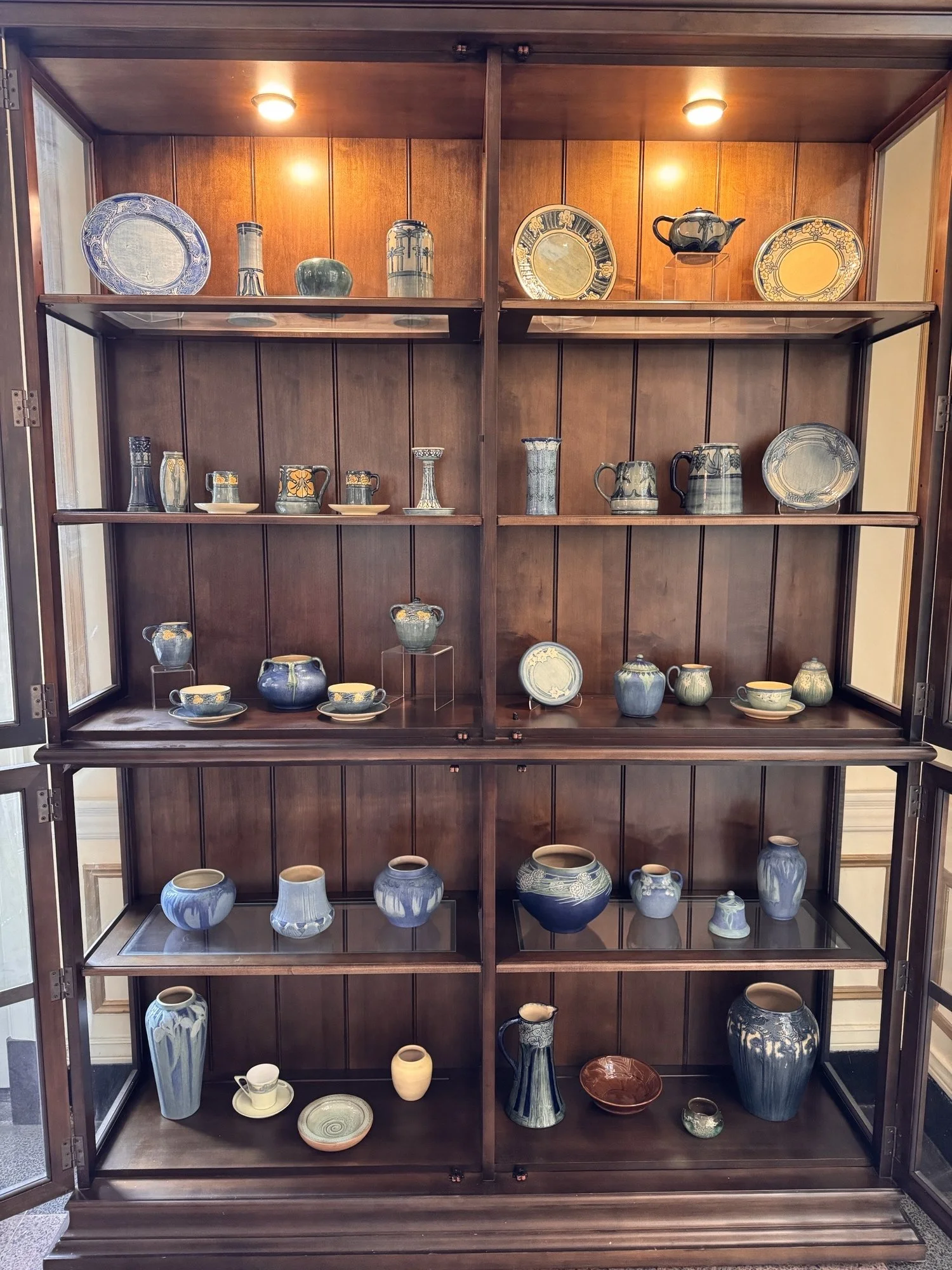
Selections of Newcomb Pottery from the LSU Museum of Art’s permanent collection are now on view at the LSU French House, part of the Ogden Honors College.
My curatorial and design process was largely driven by my imagination. When I first saw the Quimper back in October, I immediately had ideas and visions for how the pottery would fit in the museum. Thankfully, the French House had plenty of Quimper pieces that we were able to display in the case. I began the process by researching Quimper pottery, the French House, and the Henriot Quimper factory. All the information was useful in writing the text panels and organizing the display. Then, I created a digital layout and rearranged different pieces according to color, size, shape, and pattern. When my design was ready, I measured all the pieces and ordered the necessary display furniture for the bowls, platters, etc.
I followed the same process to design and curate the Newcomb pottery from the LSU Museum of Art’s permanent collection that was going on display at the French House. My selection was inspired by Louisiana colors and landscapes, including blues, greens, browns, and yellows. By mid-November, it was time for the installation. We packed the Newcomb pottery and headed to the French House, where I brought my vision to life with the curatorial team. Both installations went smoothly, thanks to the digital layouts I created, and in the end, everything looked perfect.
For visitors who may not be familiar with Quimper pottery, can you share a bit about its history and why it’s significant—especially in relation to French culture and the partnership with the LSU French House?
In the late seventeenth century, Quimper pottery was created to reflect the heritage and culture of Quimper, a small town in the Breton region of France. By the twentieth century, a major faience factory, Henriot Quimper, produced much of the pottery sold throughout the countryside. In 1935, LSU constructed “La Maison Francaise”, a dormitory for students to learn and experience French traditions and language. Anita Olivier Morrison, the housemother, traveled to France in the summer of 1936, where she purchased sets of Quimper tableware pottery for the students. The dining sets included teapots, pitchers, saucers, compotes, and more. The Quimper pottery was used for over thirty years until the French House officially closed its residency in 1968, donating the faience to the LSU School of Nutrition and Food Sciences. In 1999, the French House was transformed into the Ogden Honors College, where it remains today. The Quimper pottery was eventually returned and displayed in the heart of the French House, until now, where it is currently displayed at the LSU Museum of Art.
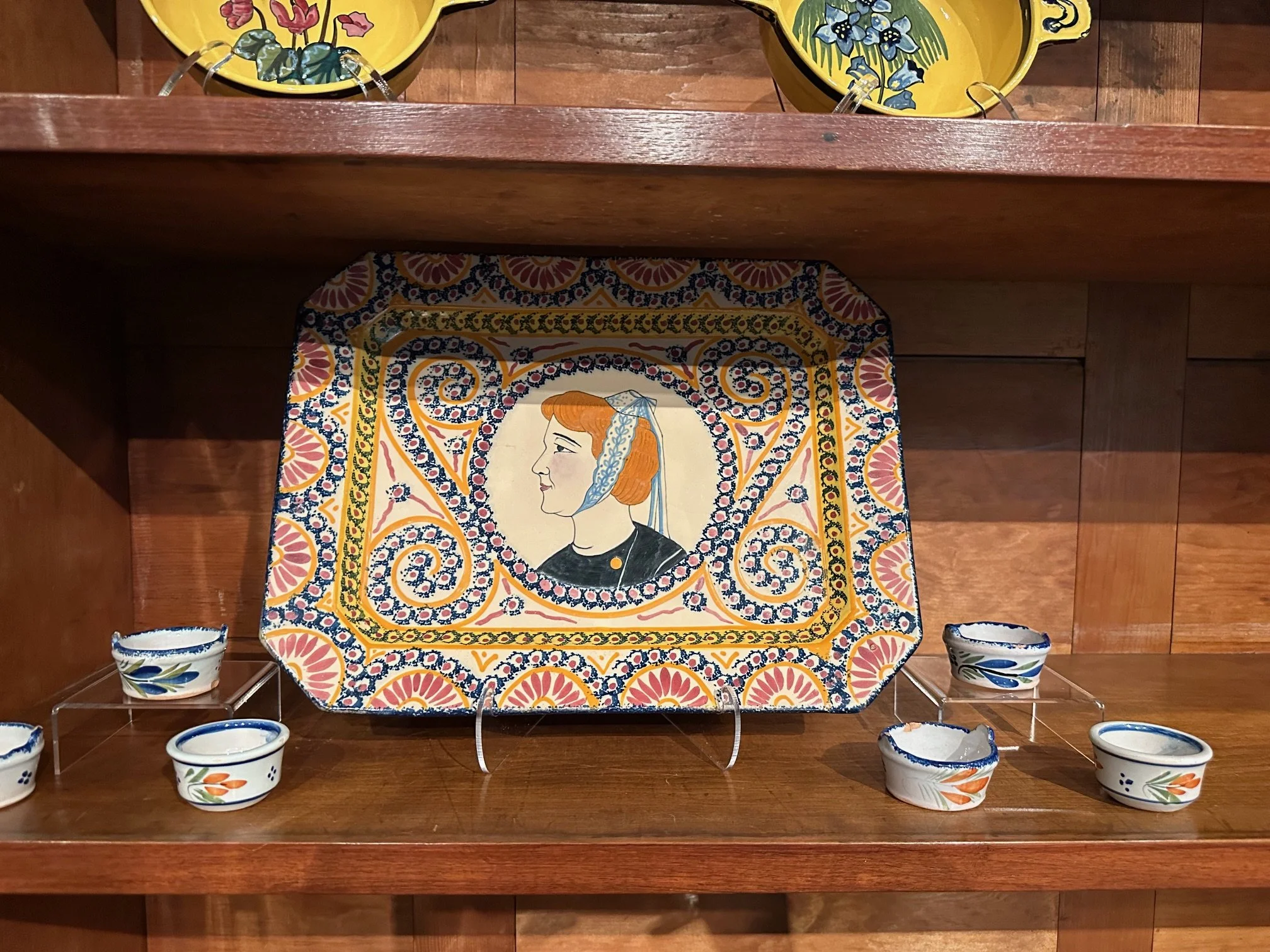
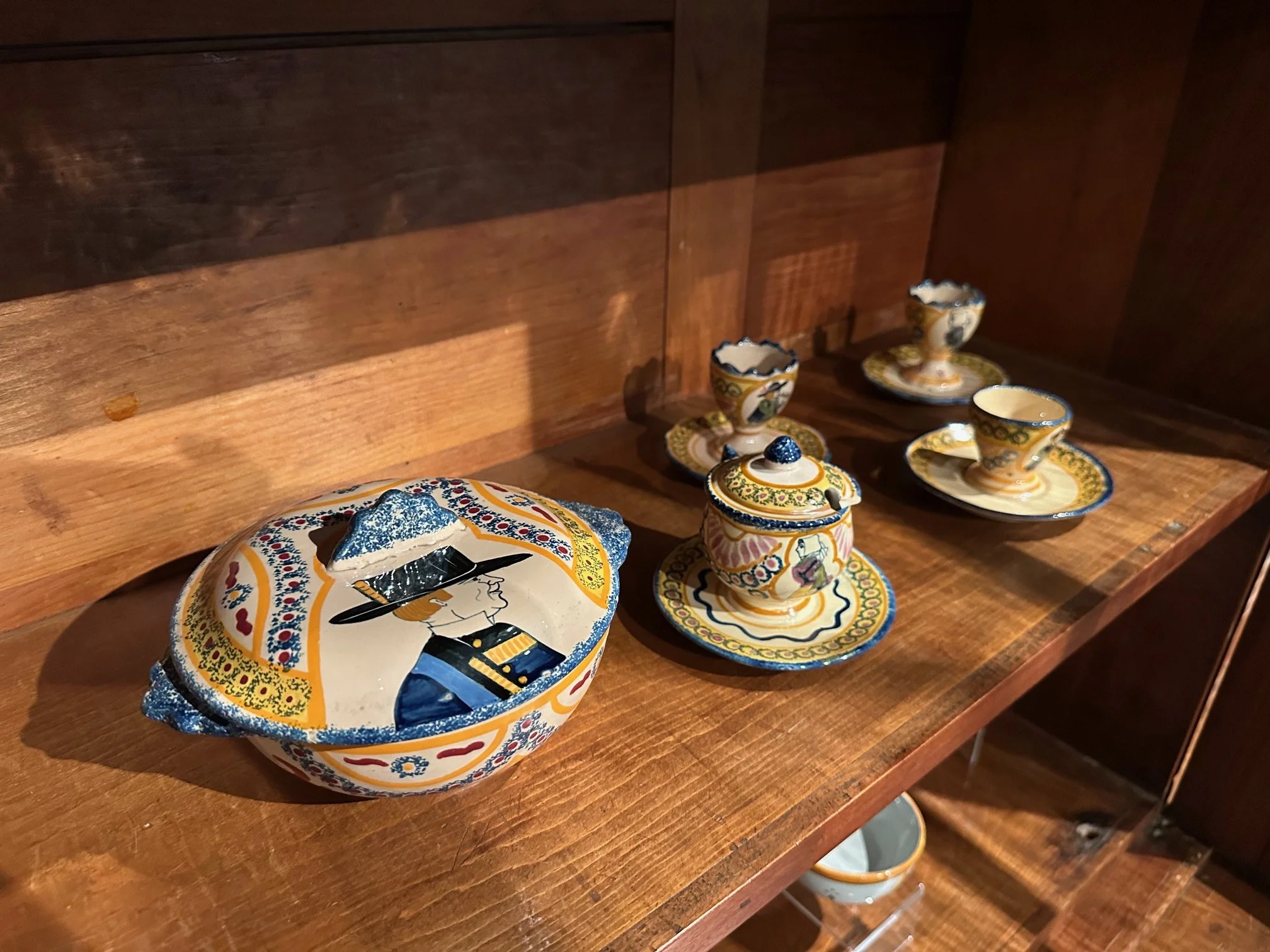
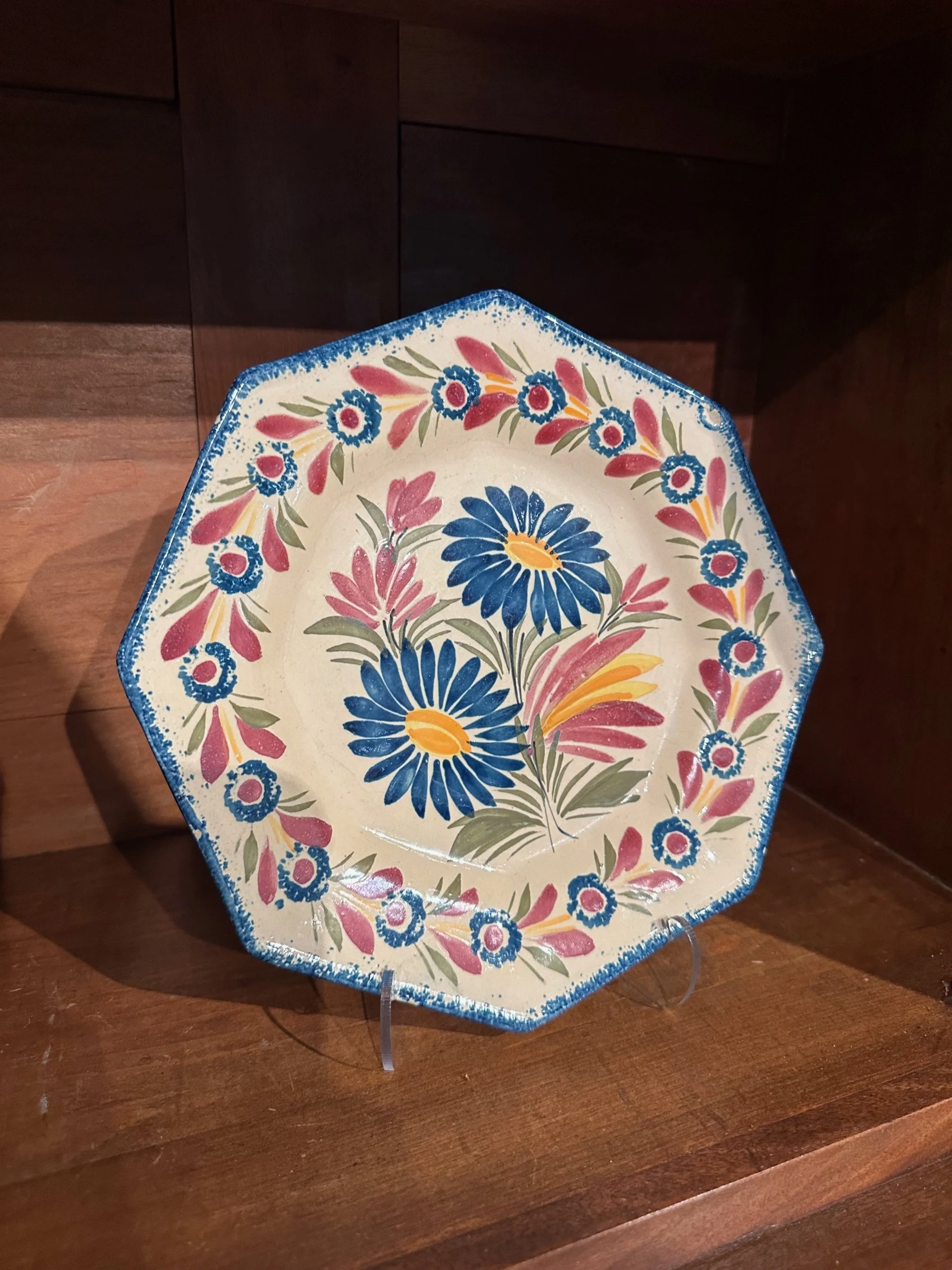
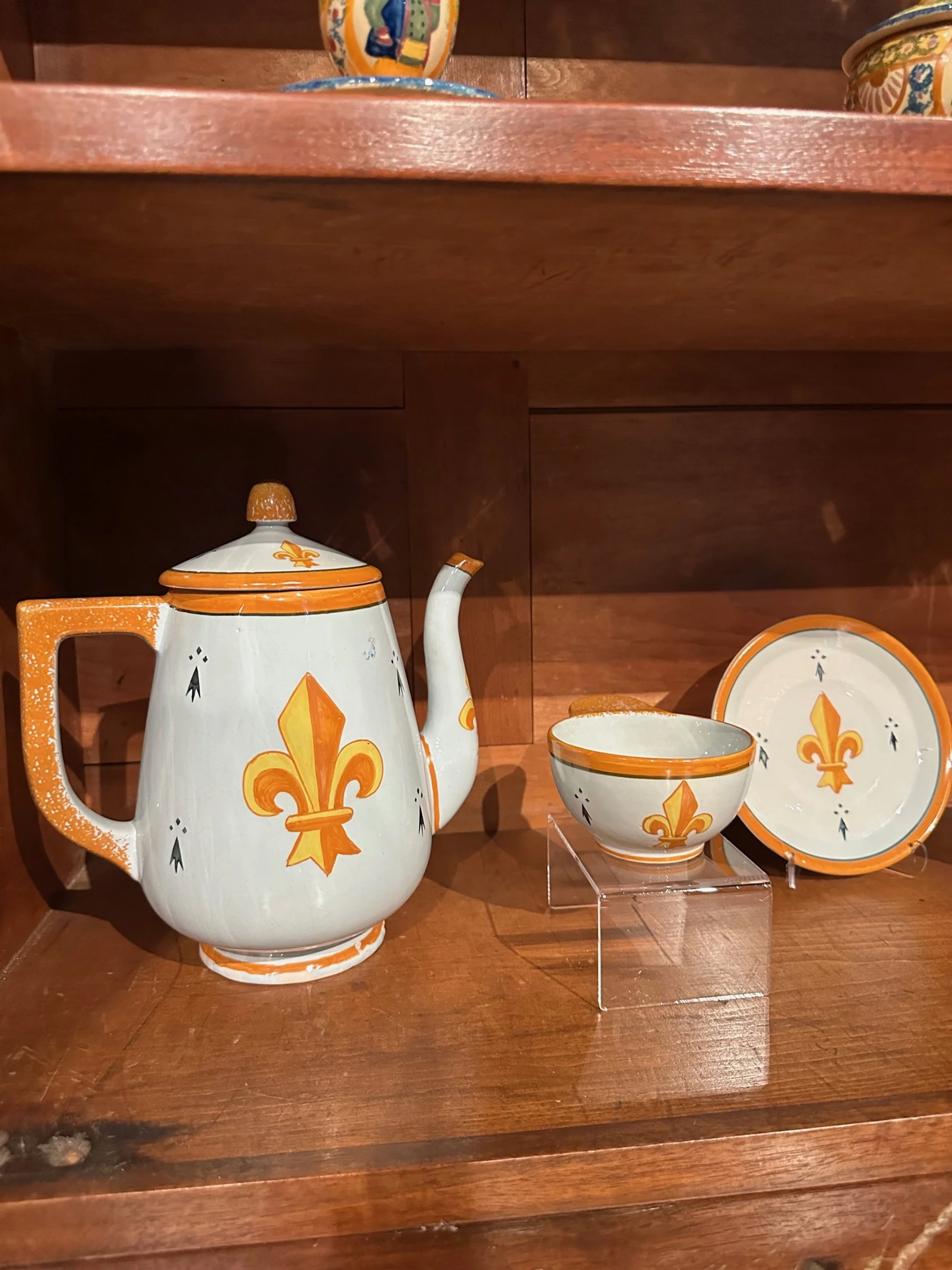
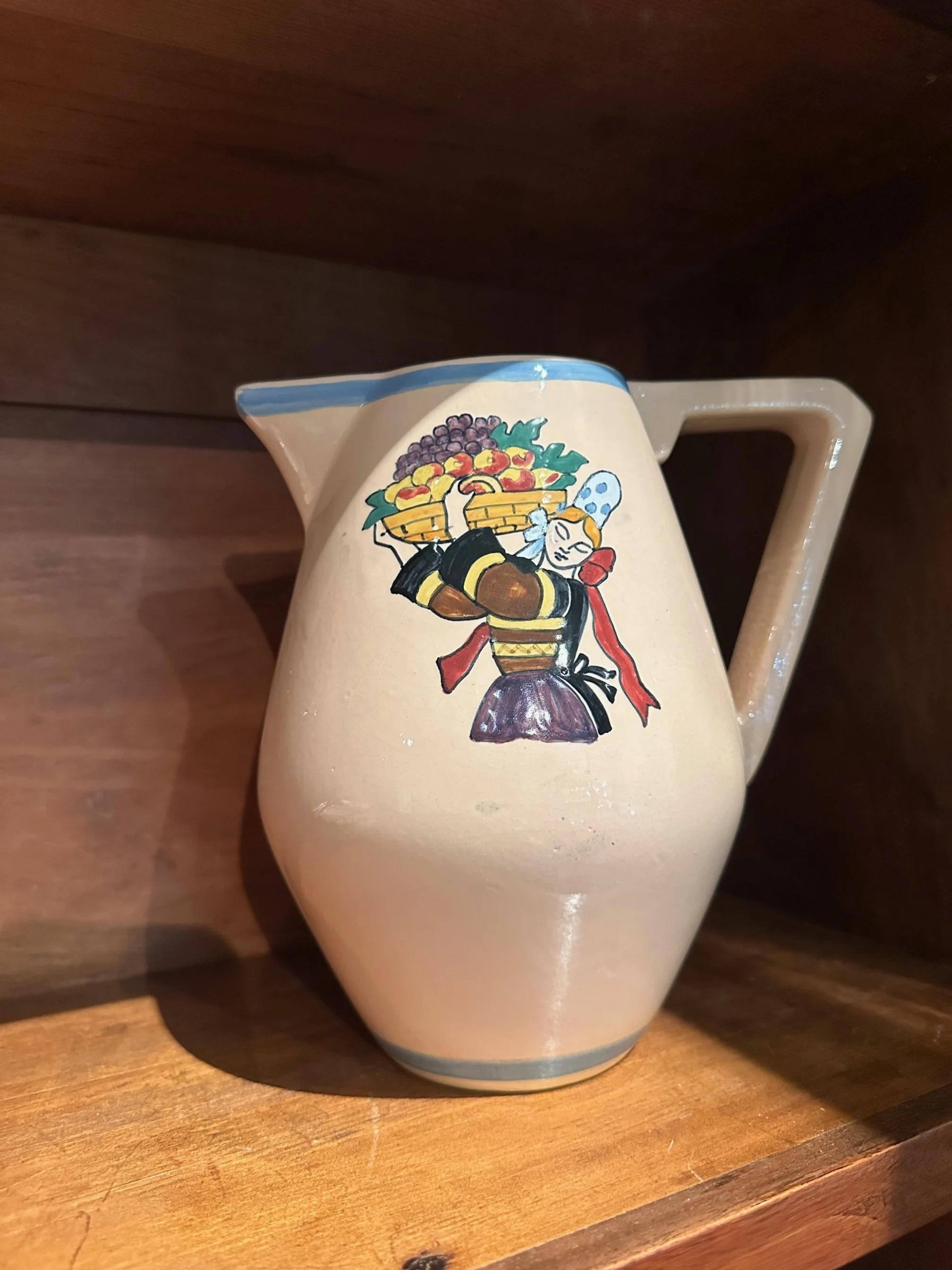
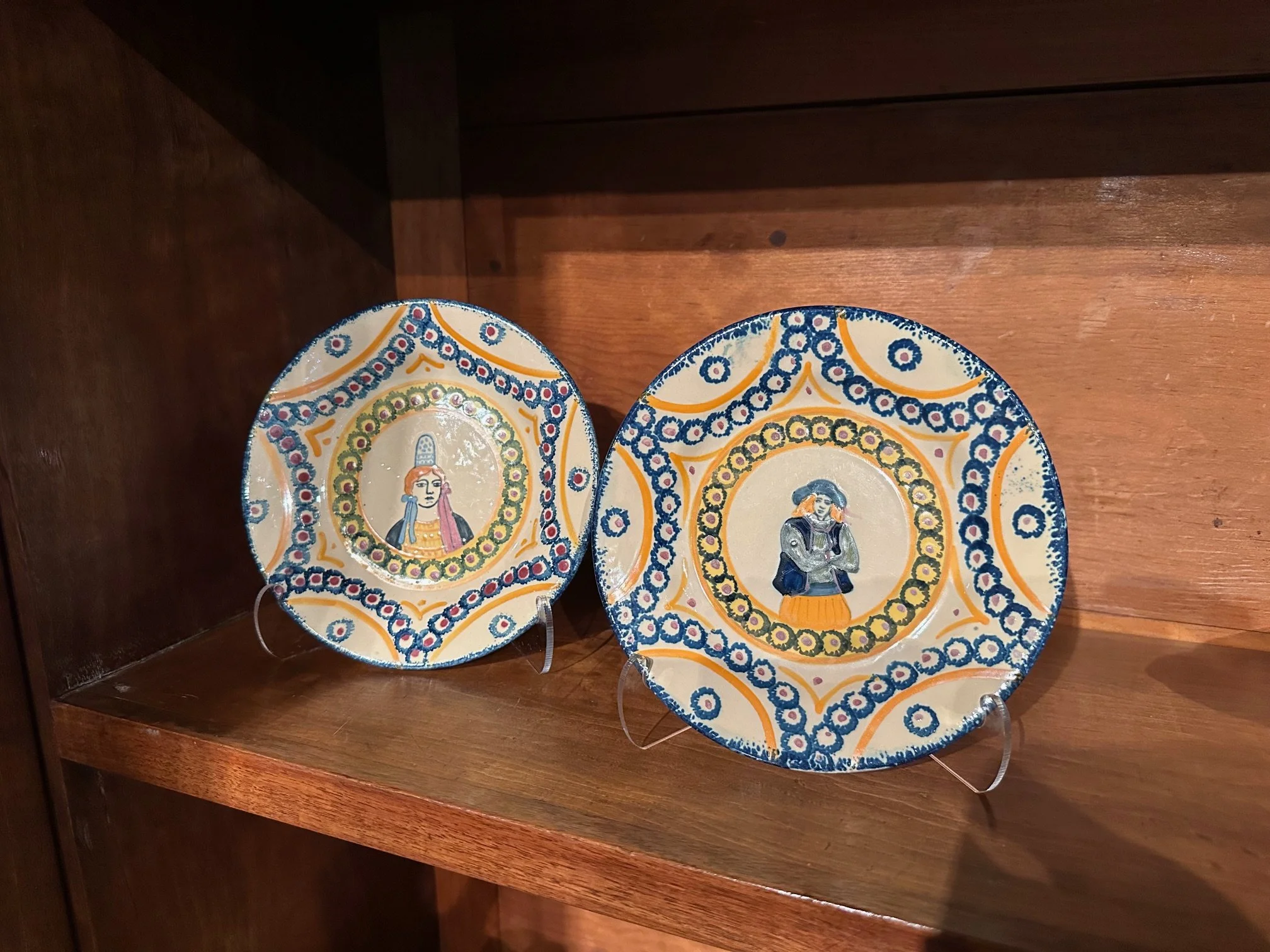
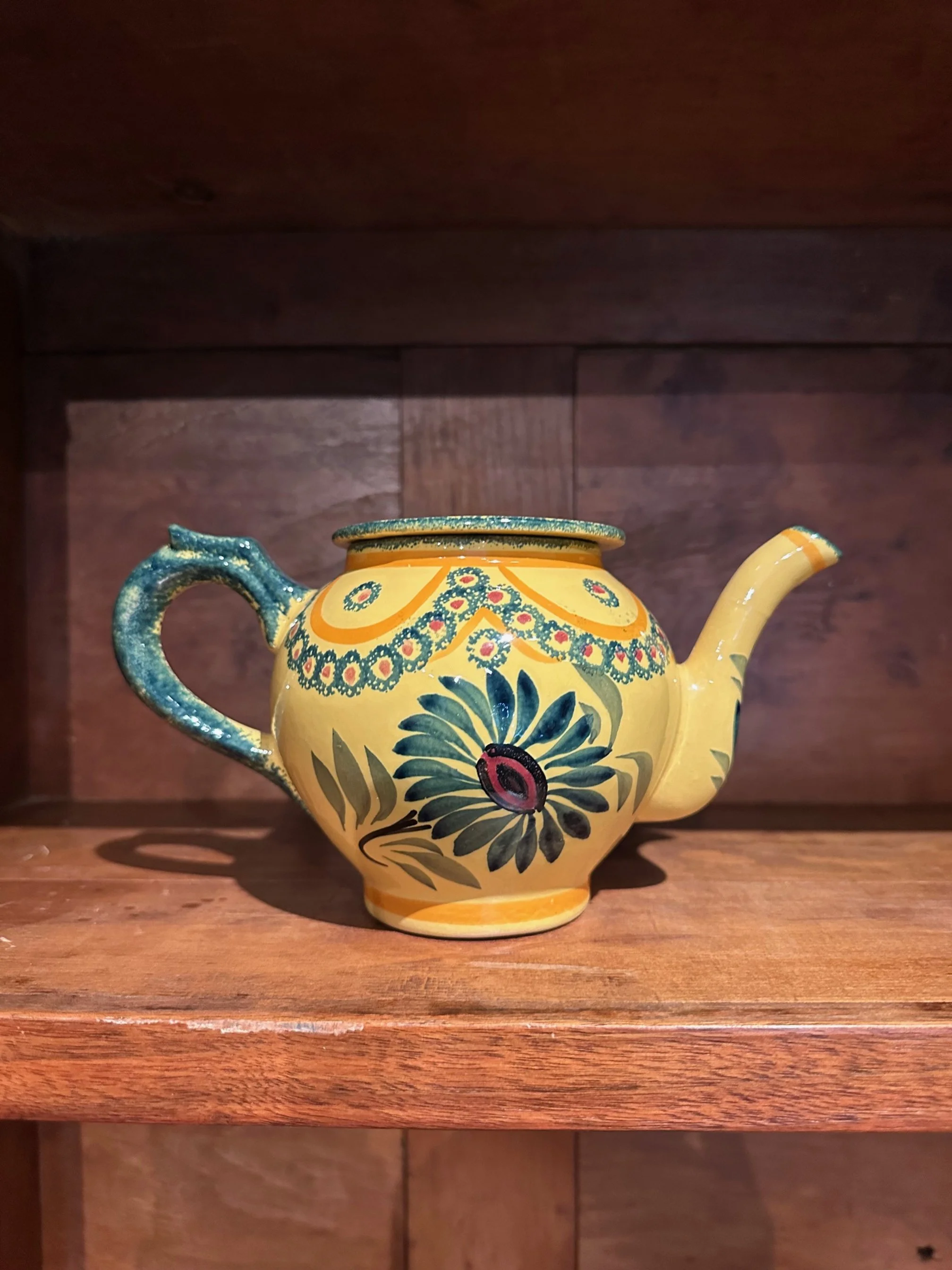
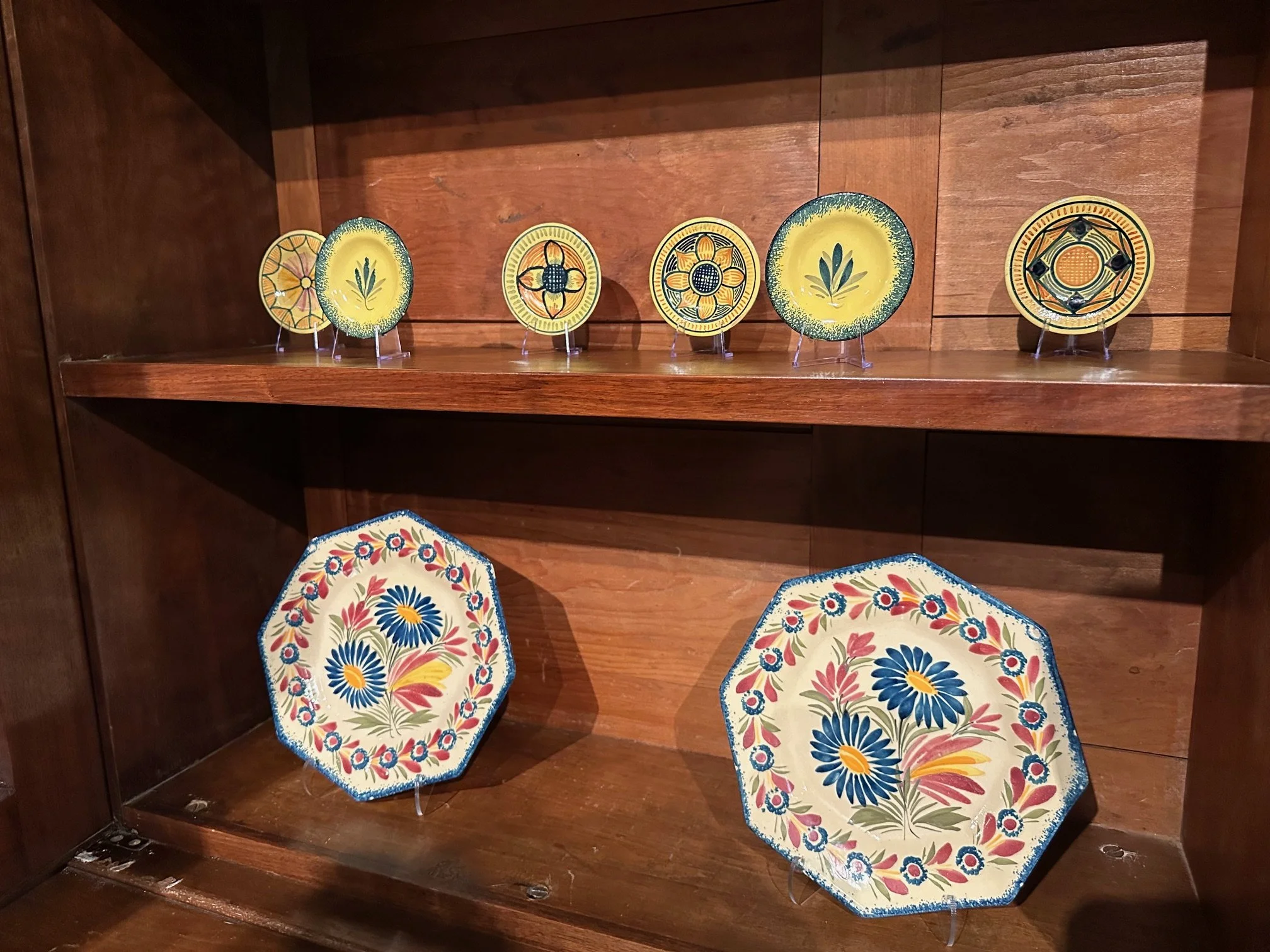
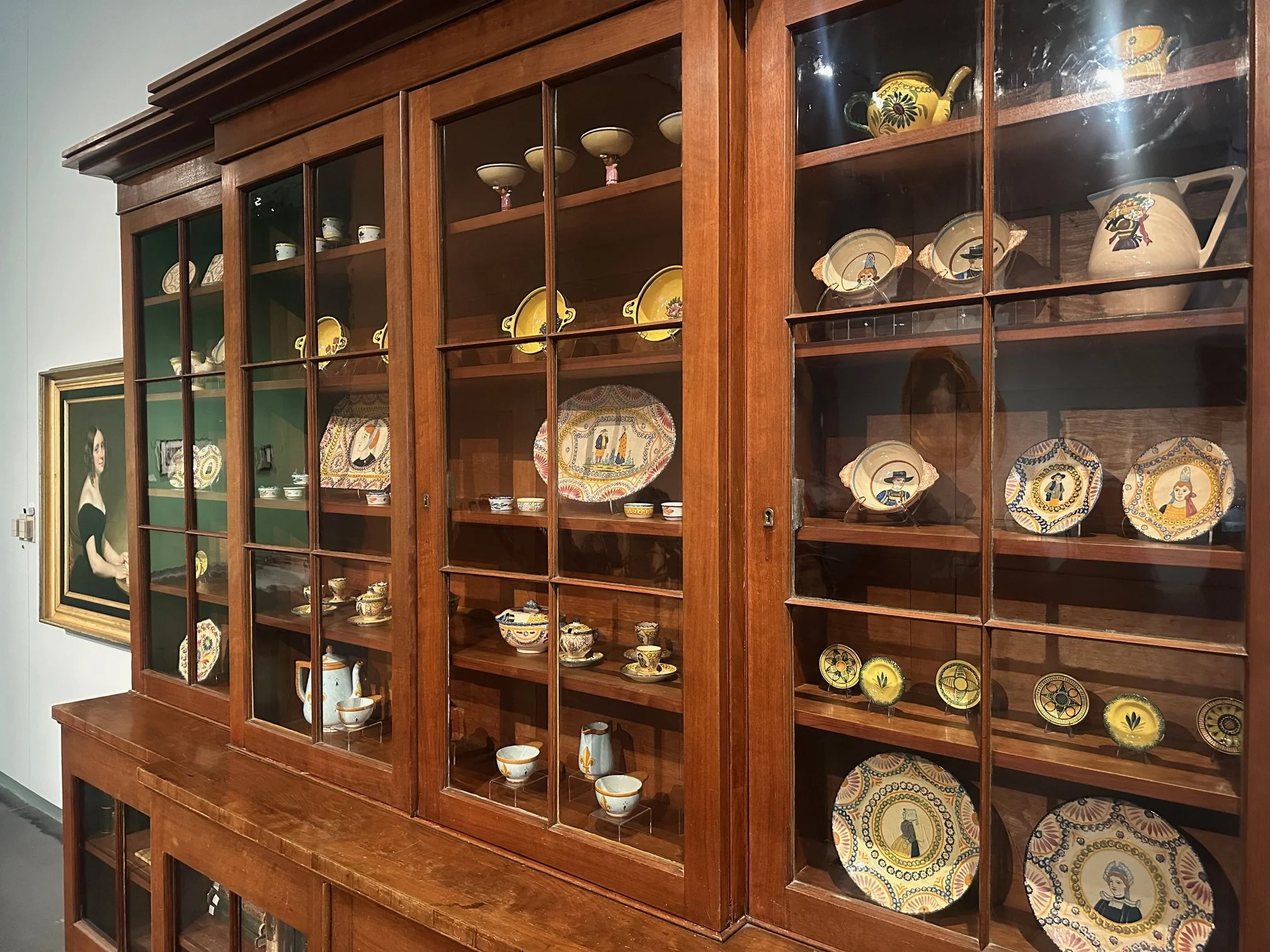
Quimper pottery (pictured in the gallery above) is known for its colorful motifs and distinctive styles. Can you tell us about a few? What details should visitors keep an eye out for—and do you have a favorite piece on view? What makes it stand out to you?
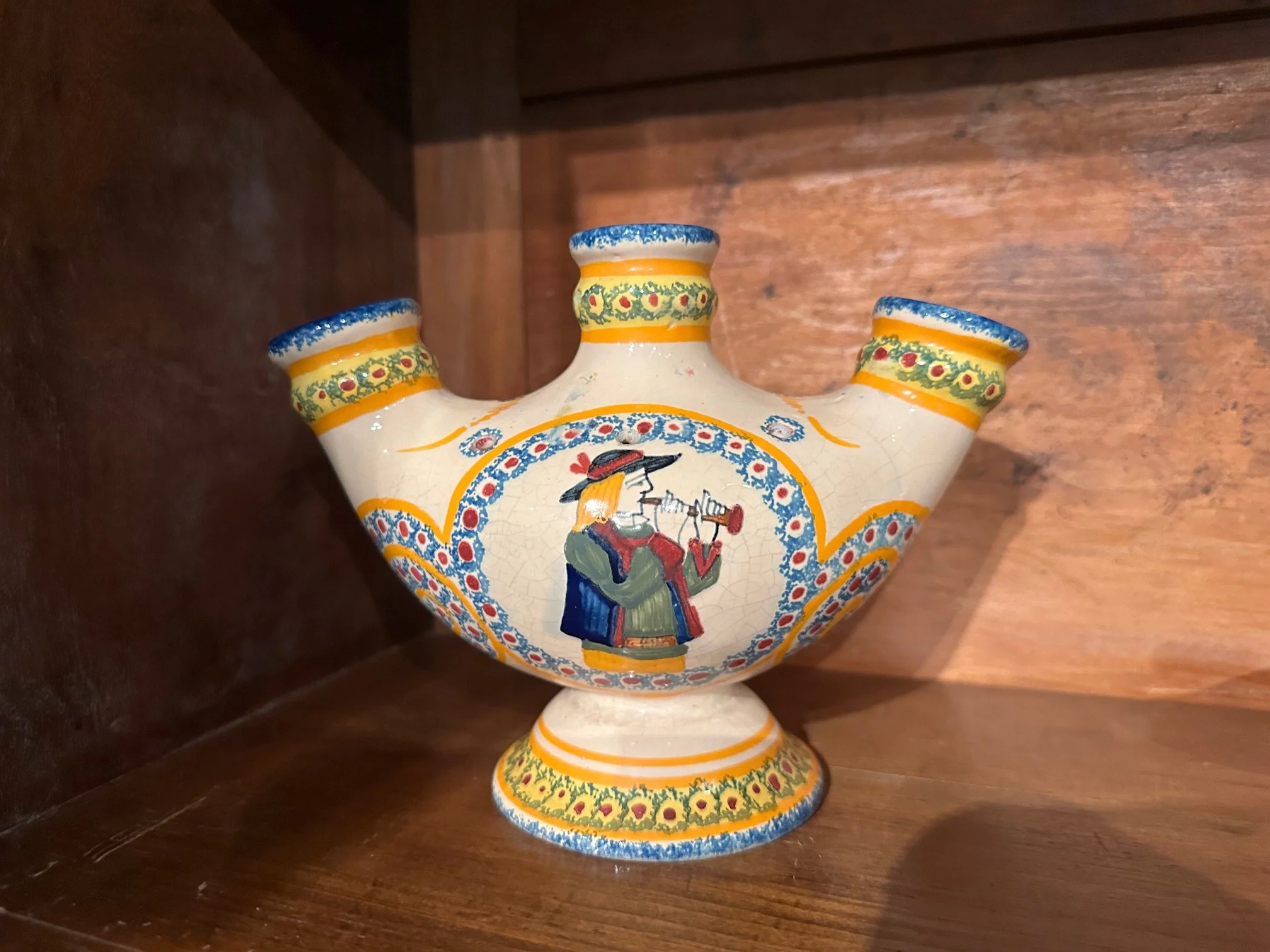
Quimper faience has very distinctive and common designs and patterns. Throughout the display, viewers will see numerous traditional designs, including Bleuets, Lys, Petit Breton, and Ivoire Corbeille.
Bleuets
The Bleuets pattern is a traditional Breton design that features colorful flowers throughout the region. This pattern can be seen in many of the plates and bowls throughout the display.
Lys
The Lys pattern is specific, depicting a fleur-de-lis symbol and ermine tail logo that represents France and Brittany. The bottom of the display presents a small set with the design.
Petit Breton
The Petit Breton pattern became popular in the mid-nineteenth century, representing Breton men and women in traditional provincial costumes. This pattern is exhibited throughout the display, but pay close attention to the compotes at the very top.
Ivoire Corbeille
Finally, the Ivoire Corbeille pattern is the most recognizable and, in my opinion, the most beautiful. This pattern features the busts of Breton men and women in provincial costume, like the Petit Breton pattern, surrounded by painted floral garlands and lattice. The Ivoire Corbeille design stands out to me because it reminds me of France, a colorful place rich in history and tradition. I would definitely say keep an eye out for the eggcups and large patterns right in the center of the display.
Last question: What’s the best advice you’ve received—or would pass along—to graduate assistants interested in museum work?
I think the best advice I’ve received—and would pass along—is to ask questions and use your voice. Throughout this journey, I’ve learned so much, and it can definitely feel overwhelming at times. There are so many departments and processes involved in running a museum, even for something as specific as installing an exhibit. Asking questions, sharing ideas, and seeking clarification are some of the best ways to learn and figure out what parts of museum work you enjoy most. Don’t be afraid to ask for help or a better explanation—growth takes time, but the experience and hard work truly pay off.
See a part of art history and LSU history now in the Decorative Arts Gallery at the LSU Museum of Art. Quimper Pottery, on loan from the LSU Ogden Honors College, is now on view.
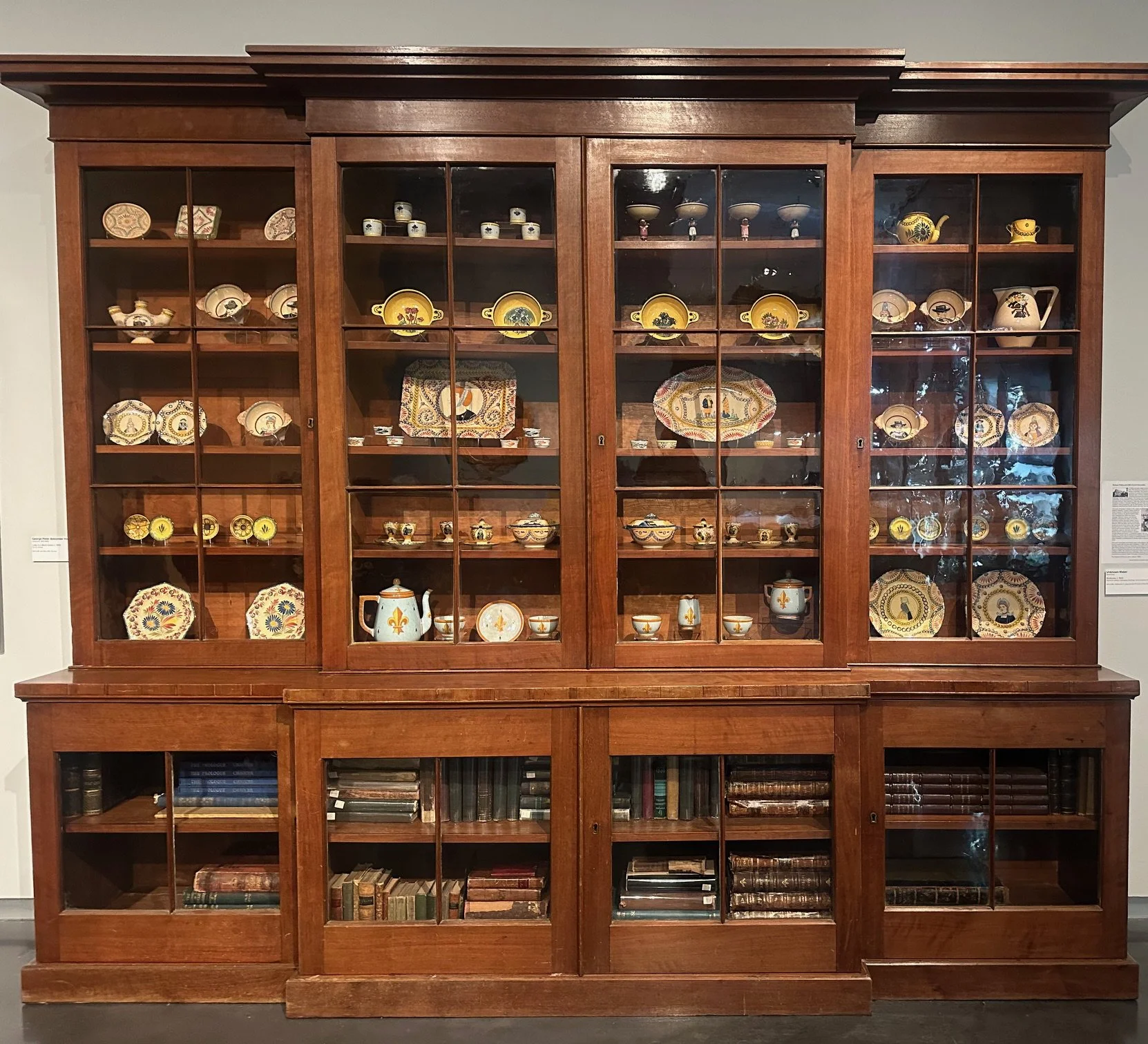
Quimper Pottery, on loan from the LSU Ogden Honors College, now on view in the Decorative Arts Gallery at the LSU Museum of Art.
This interview was conducted by Sarah Amacker, Communications & Marketing Specialist for the LSU Museum of Art.