
Staff Selections: Works from the Permanent Collection features artworks from the LSU Museum of Art's permanent collection selected by museum staff. Organized by the museum's registrar, Marianna Luquette, the exhibition invites visitors to discover the works staff members chose and why these artworks are meaningful to them.
See Staff Selections: Works from the Permanent Collection now through September 13, 2026, at the LSU Museum of Art.

Roy Lichtenstein (American, 1923–1997), Untitled, 1969. Ink of paper plate. Gift of Craig Hendrix.
“I picked this paper plate by Roy Lichtenstein because, to me, it represents the transformational power of art. Created in 1969, the plates were produced and sold to the public in inexpensive packs of ten, bringing an iconic Pop Art image into people’s daily lives. I love that he took an ordinary object and turned it into a canvas, bringing art into everyday life.
I didn’t grow up visiting museums or taking art classes. An encounter with art in college changed my life, leading me to a career in museums and my own artistic practice. That’s why this plate resonates with me. It reminds me that art has the power to transform not only ordinary objects, but also the people who encounter it. It can spark curiosity, inspire creativity, start conversations, and sometimes even change the course of a person’s life—just as it did mine.”
–Sarah Amacker, Communications & Marketing Specialist
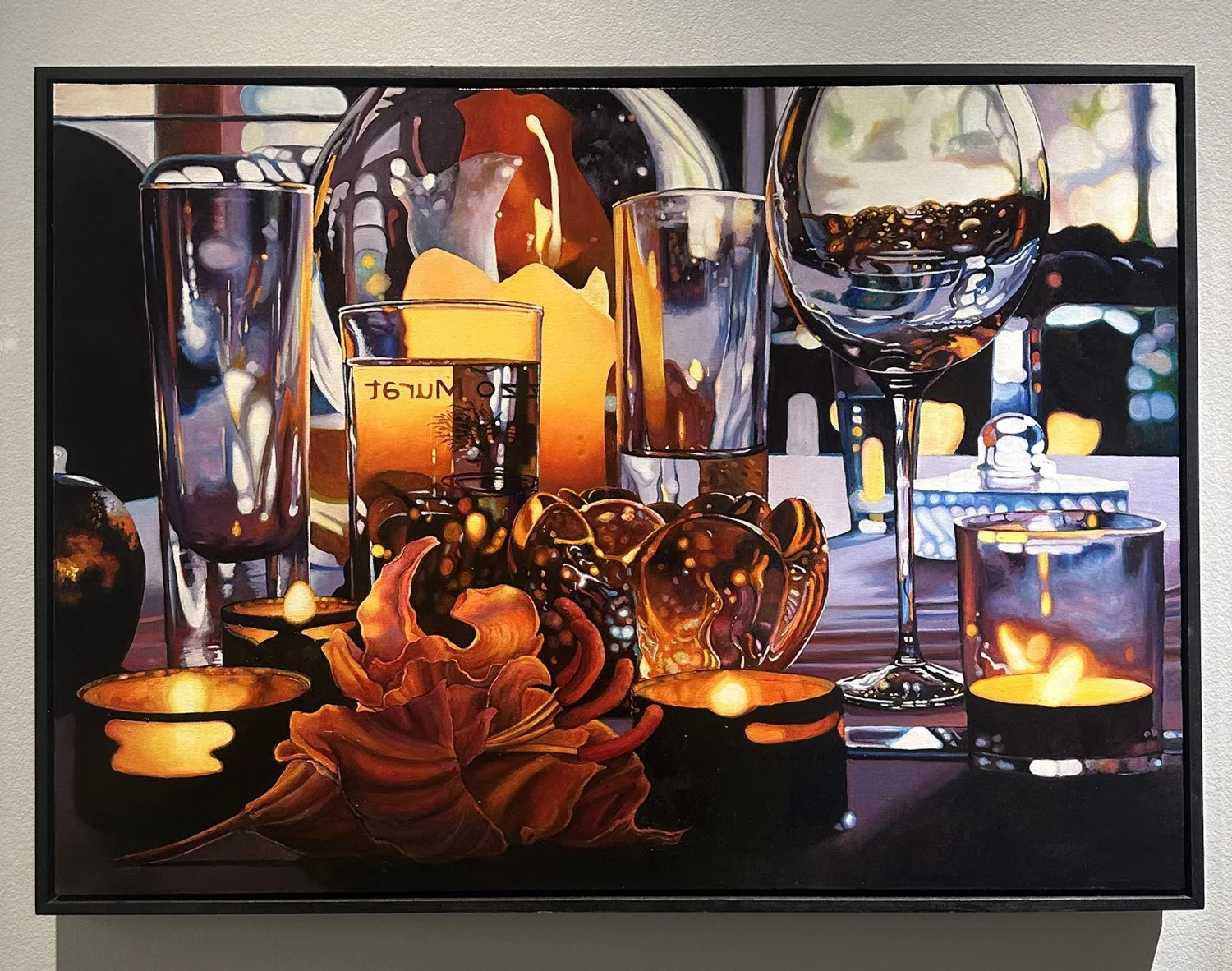
Libby Johnson (American, b. 1950), Sanctuary, 2008. Oil on canvas. Purchased with funds from the Friends of LSU Museum of Art Endowment.
“I have been an admirer of Libby Johnson's paintings for quite some time, and Sanctuary is one of my favorites. Her still life paintings are beautifully composed, and the richness of the colors is remarkable. The way she captures light, texture, and detail makes each subject appear incredibly lifelike. Every painting reflects a sense of warmth, beauty, and tranquility that draws me in and makes me appreciate her extraordinary talent.”
–LeAnn Russo, Museum Store Manager & Visitor Services Manager
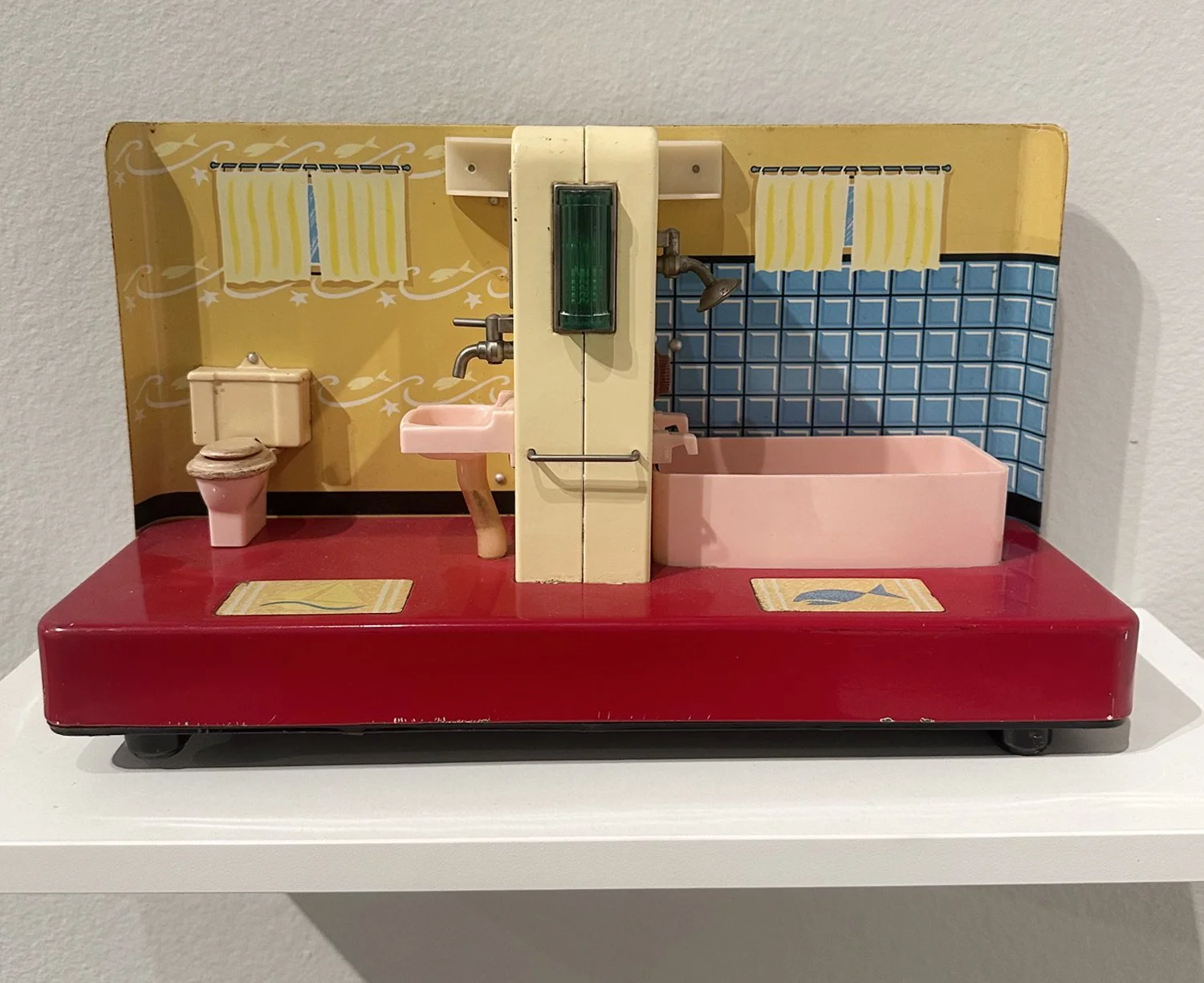
Unknown Artist, Bathroom Scene, undated. Plastic and metal.
“Toys are an instant conversation starter. I selected this piece because of its potential to foster intergenerational connections through conversations about play and memory. My hope is that grandparents, friends, children, and siblings can look at this object and share stories about their childhoods. I learned a great deal about the impact of childhood objects when we hosted our Golden Legacy: Original Art from 80 Years of Golden Books exhibition last year. So many visitors shared their personal stories about the books. One visitor came to see the exhibition in honor of his wife, an elementary school educator. She had since passed, but he came to see these illustrations to be closer to her memory and cherish her love of teaching and reading books to her classes over the years. I love museums because of the special and personal encounters that can be had with an artwork. I hope others enjoy looking at this miniature toy as much as I do!”
–Callie Smith, Curator of Education & Public Programs
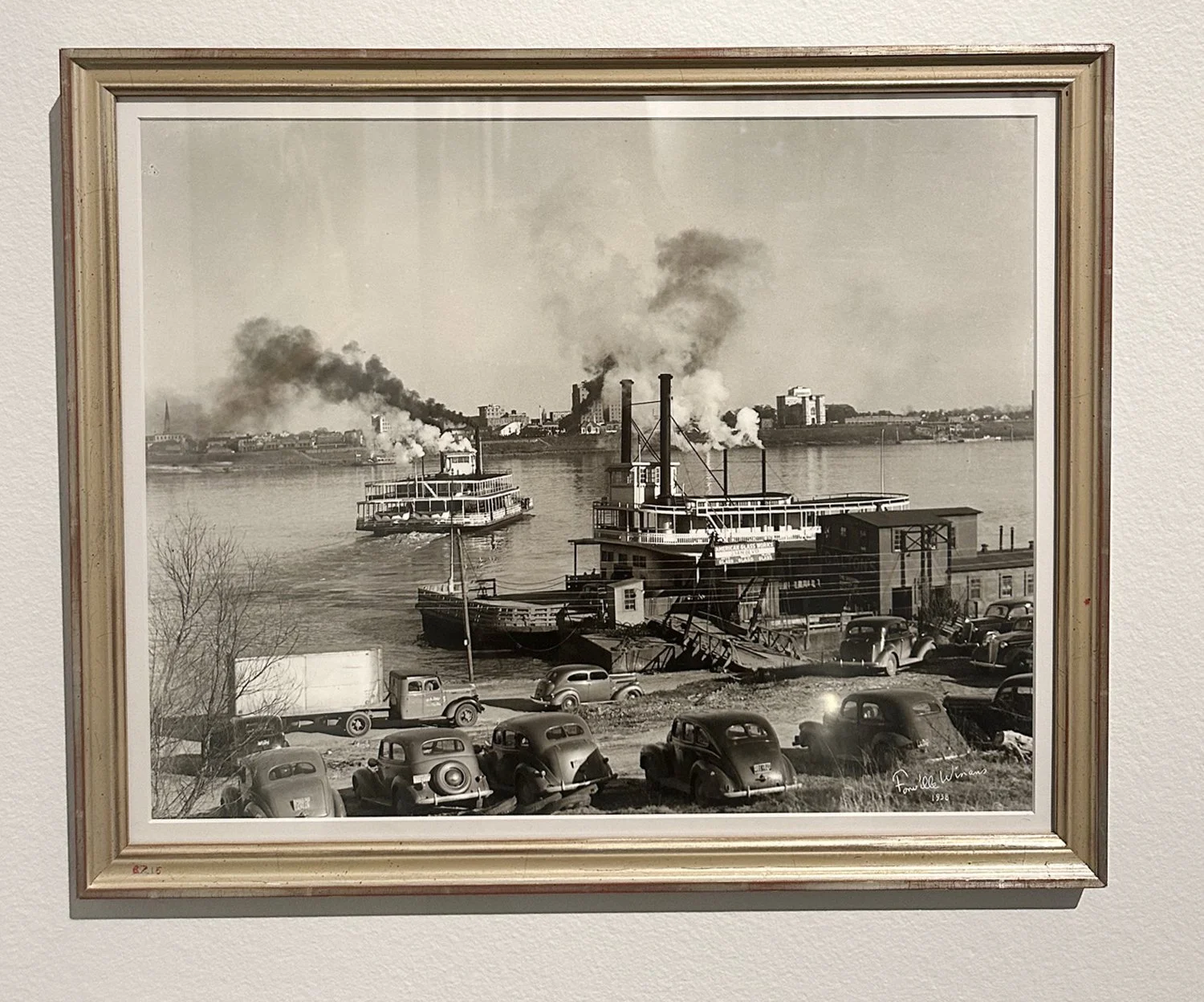
Fonville Winans (American, 1911–1992), Ferry Landing, Port Allen, 1938. Gelatin silver print. Gift of the Friends of the LSU Museum of Art.
“I chose Fonville Winans' Ferry Landing, Port Allen because it offers a glimpse of Baton Rouge and the Mississippi River as they appeared in the 1930s. The photograph evokes a sense of nostalgia with its vintage automobiles and the early development of Baton Rouge's downtown skyline. Yet, if you look across the river today, you will see a similar industrial landscape, illustrating how the region has endured through nearly a century of change.
Fonville Winans was one of Louisiana's most significant documentary photographers, capturing the state's landscapes, communities, and ways of life with honesty and sensitivity. His photographs preserve moments that might otherwise have been lost, making Ferry Landing, Port Allen not only a beautiful image but also an important historical record of Louisiana's cultural and environmental heritage.”
–Misty Pride, Curatorial Special Projects
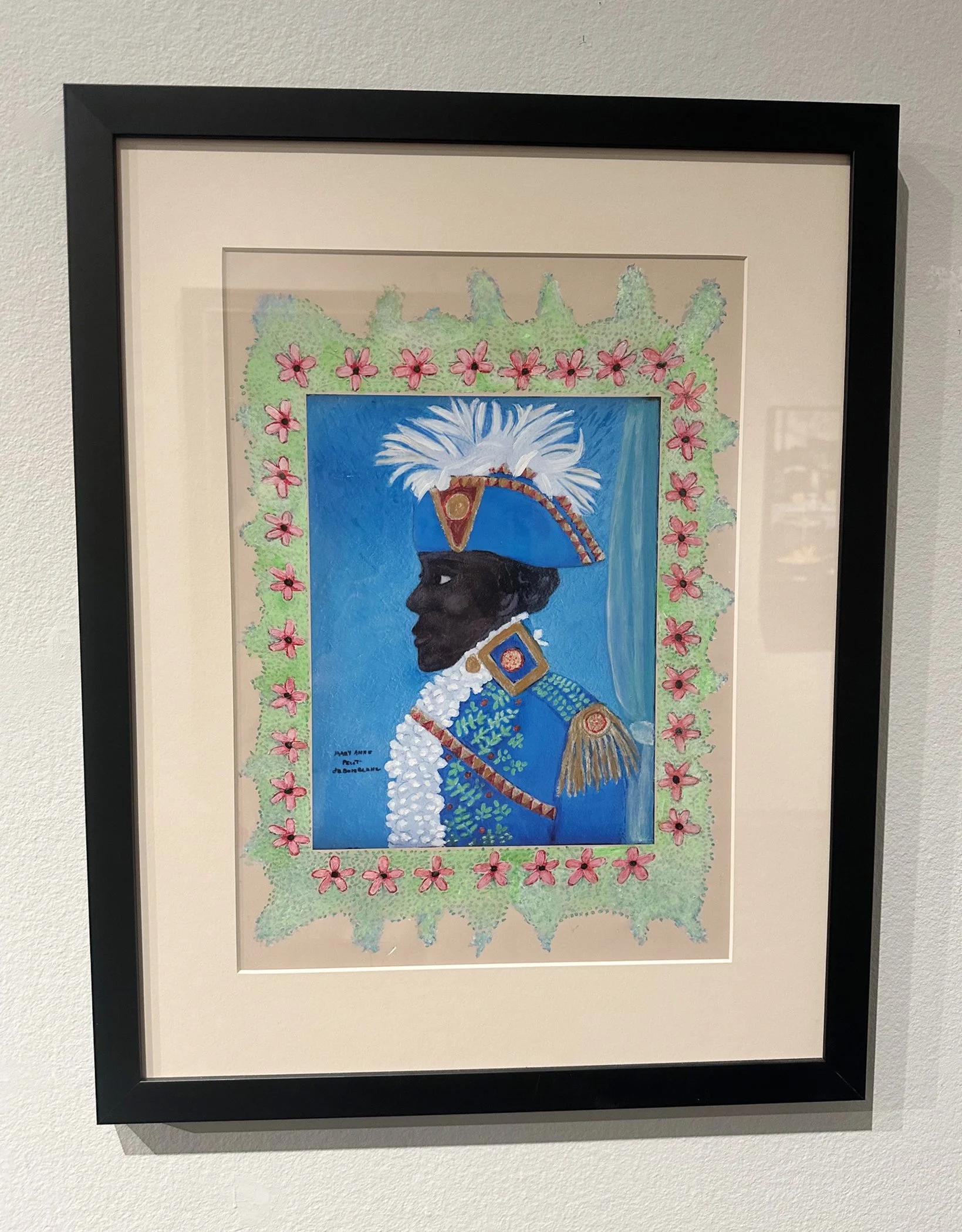
Mary Anne de Boisblanc (American, 1925 – 2015), The First Black General in the World, Toussaint L’Ouverture, 2012. Acrylic on paper. Gift of the Artist.
“I chose to display Mary Anne de Bosiblanc's The First Black General in the World, Toussaint L'Ouverture (2012) because it honors the extraordinary legacy of Toussaint L'Ouverture, a pivotal leader in the Haitian Revolution whose fight for freedom transformed world history. The artwork was selected not only for its artistic merit but also for its educational value. It provides visitors with an opportunity to engage with the history of Haiti, the significance of the Haitian Revolution, and the lasting influence of Black leaders whose contributions are often underrepresented in traditional historical narratives. The piece supports the museum's mission to present art that inspires dialogue, fosters cultural understanding, and encourages reflection on the diverse stories that have shaped our world.”
–Dominique Rogers, Business Coordinator
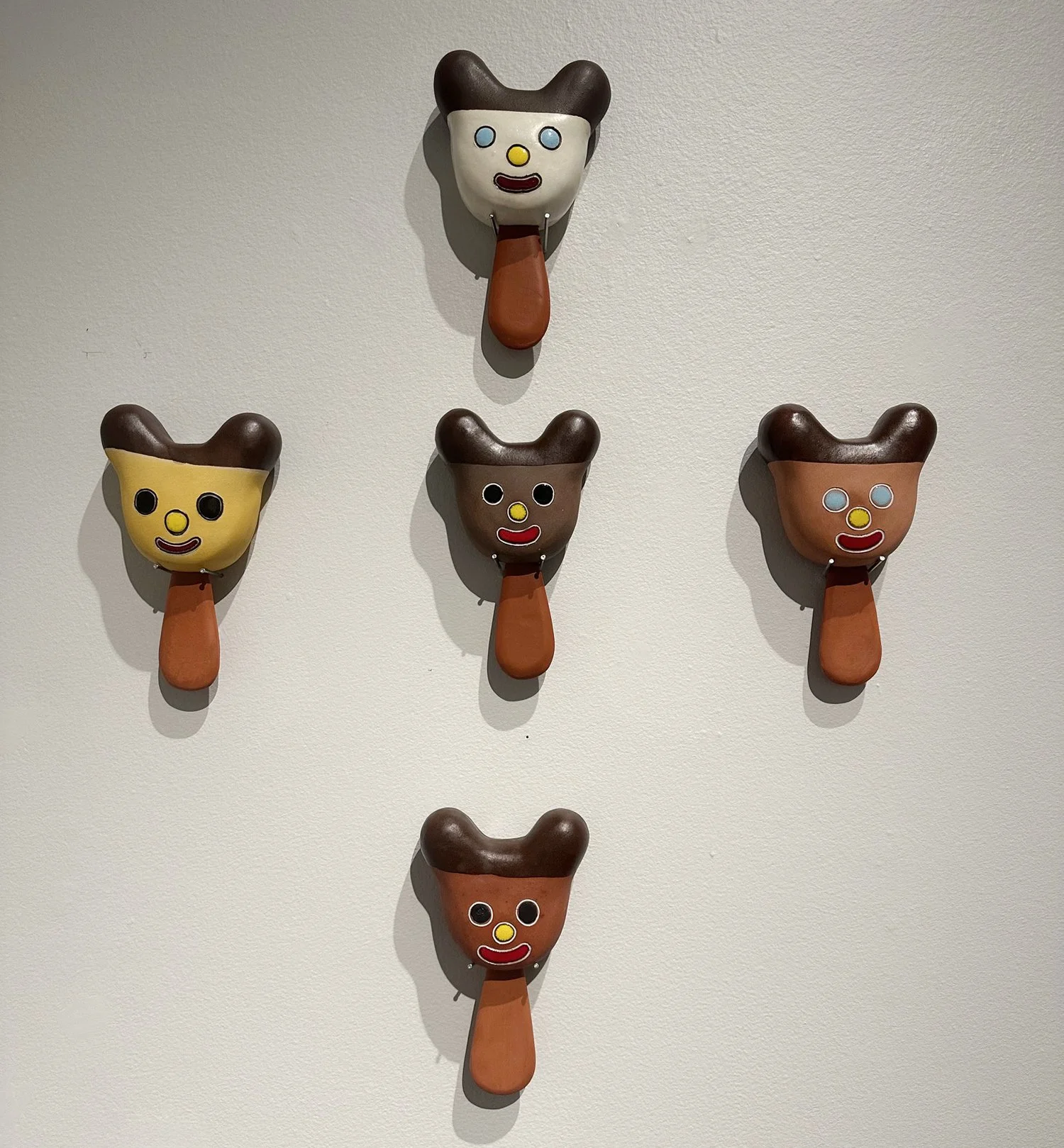
Michaelene Walsh (American), Dolls (Ice Cream Dolls), 2012. Ceramic. Gift of Michael D. Robinson and Donald J. Boutte.
“I selected works by Michaelene “Mikey” Walsh because she was one of my professors when I was a ceramics major at LSU. Long before I understood the depth of her artistic practice, I was captivated by the nostalgic familiarity of her work and the extraordinary precision with which she transformed ordinary objects into something deeply human.
Every time I walk past these works, I’m reminded that great art doesn’t always shout. Sometimes it simply asks us to look a little closer at the ordinary—and in doing so, it changes the way we see one another.”
–Sandy Parfait, Assistant Director of Operations & Visitor Services
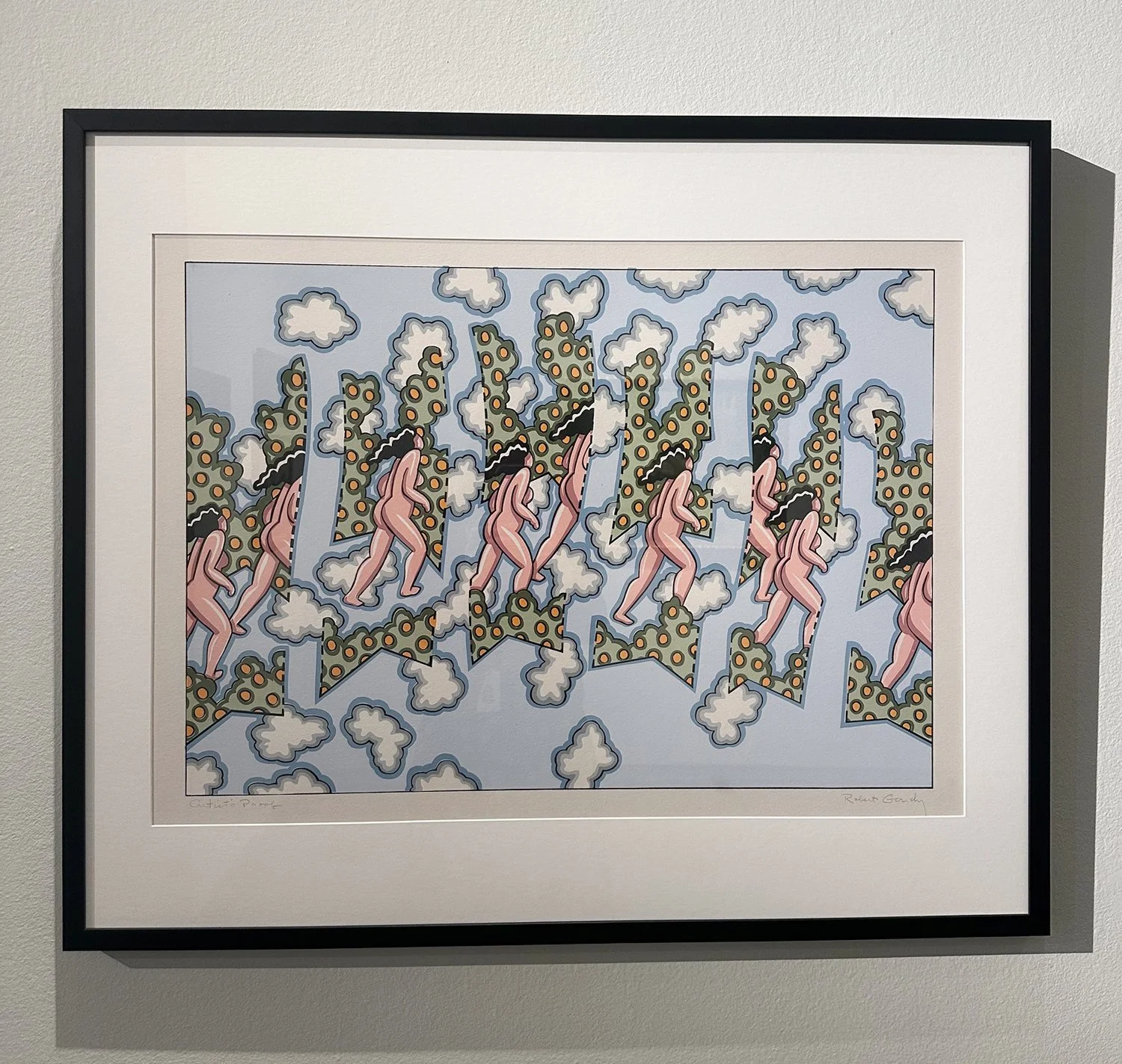
Robert Gordy (American, 1931–2022), Hesperides, 1972. Screen print. Transfer from LSU Student Union.
“Robert Gordy's work has always been very striking, to me. You can spot the vibrance in Gordy's paintings from across the room and I love how movement is expressed through his use of figures and color.”
–Travis Pickett, Preparator & Exhibition Manager
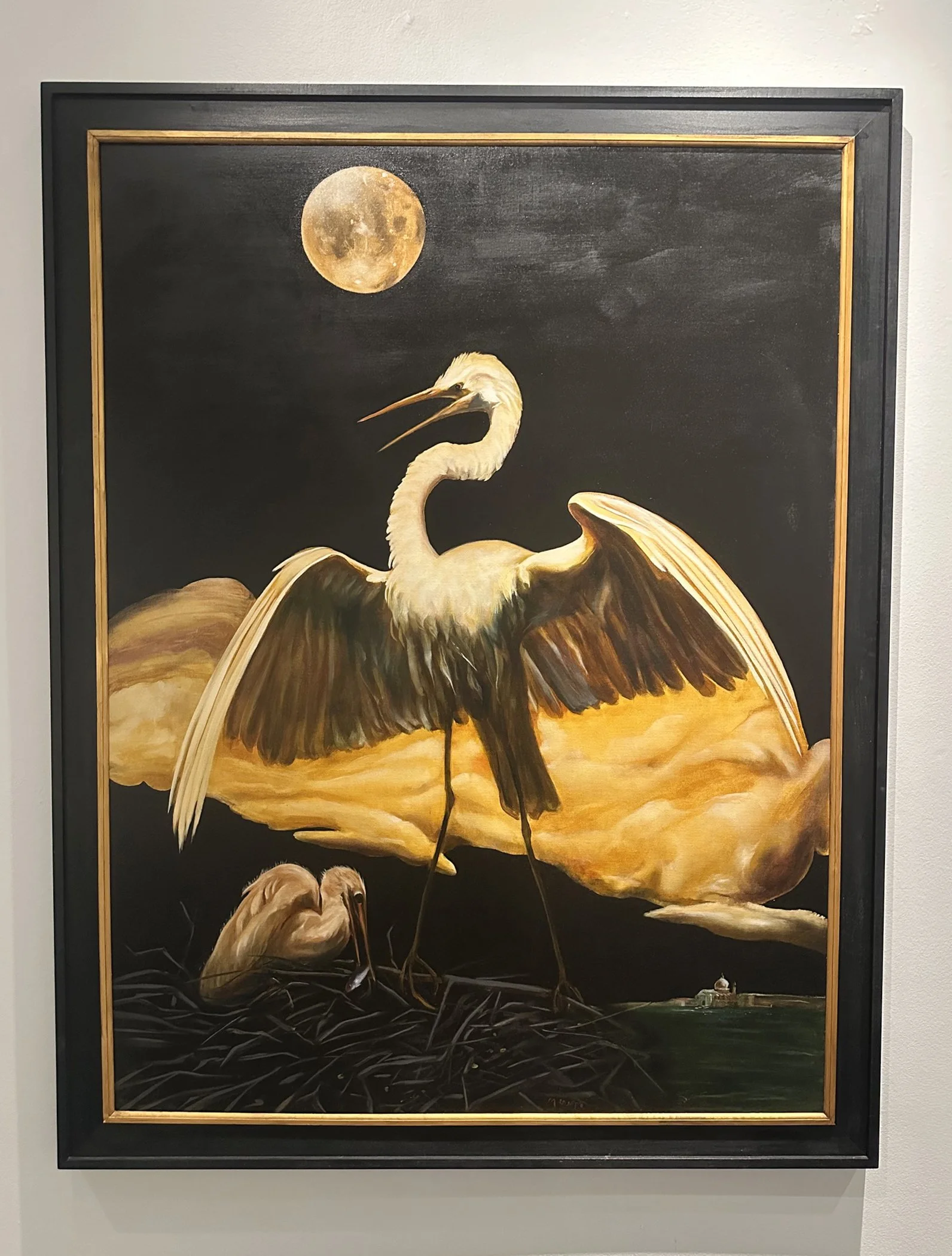
Michael Crespo (American, 1947–2010), LA Amistad de La Luna, 2006. Oil on linen. Gift of Winifred and Kevin P. Reilly, Jr.
“I selected Michael Crespo's La Amistad de La Luna because Crespo was one of my most influential teachers during my years at LSU's College of Art and Design, from 1979 to 1985, and his voice has stayed with me ever since. Set against the mysterious black backgrounds that anchor so much of his work, this painting reflects his lifelong fascination with the natural world — drawing on Italian Renaissance realism and Jungian theory to find the mystical within the familiar. Crespo taught in the LSU School of Art for 40 years, including a term as director from 1990 to 1996, shaping generations of students before his death in 2010. This piece, once featured in the museum's Birds: Works from the Permanent Collection exhibition, reminds me of the quiet, spiritual thread he saw connecting humanity, animals, and the natural world — and of how fortunate I was to learn from him.”
–Mark Tullos, Executive Director
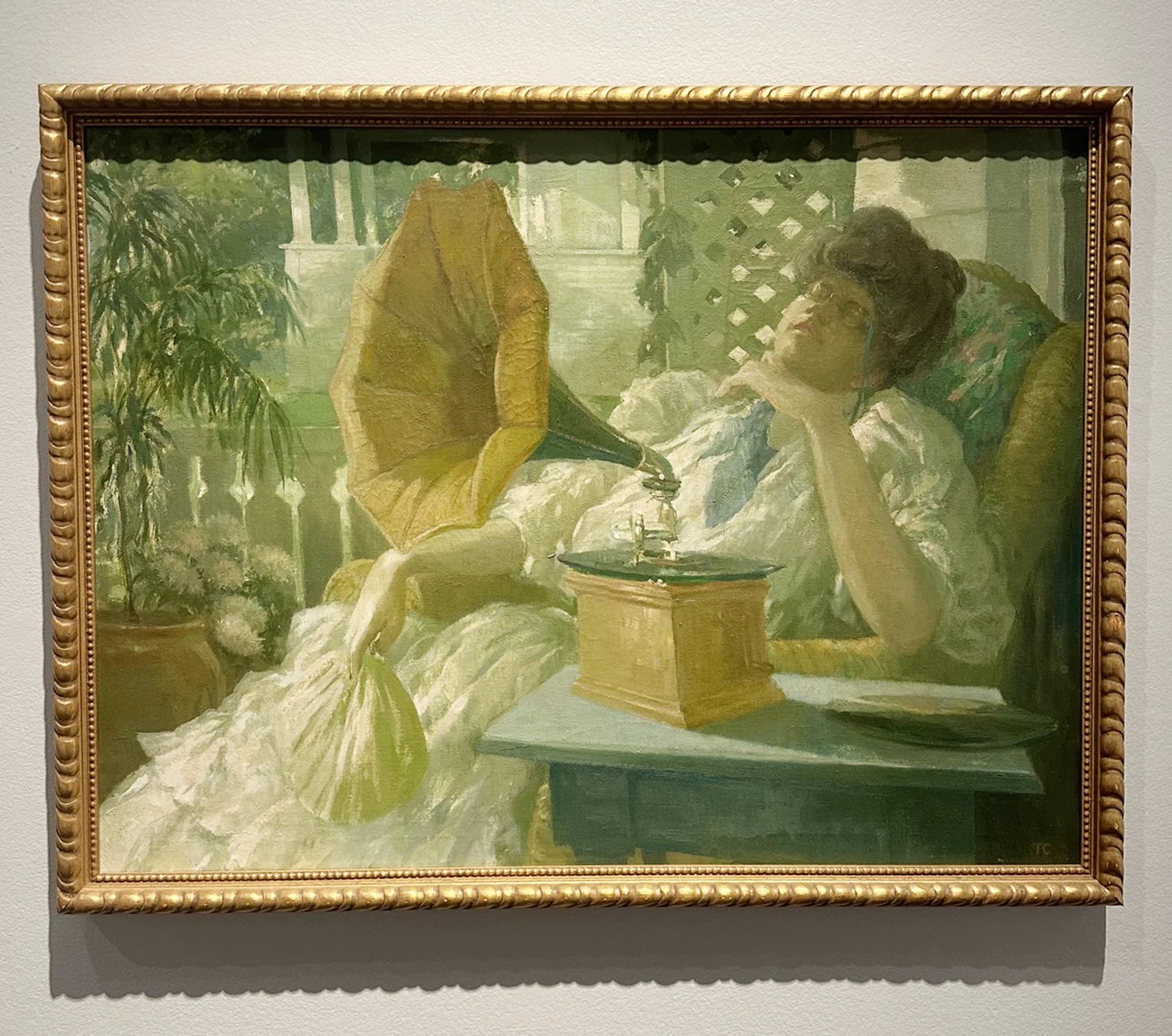
Tom Cavanaugh (American, 1923–2019), Love’s Old Sweet Song, 1965. Oil on canvas. Gift of Carl G. Kahlich.
“I selected this piece as an ode to a wonderful summer day. I often pass this piece in Secure Storage and think to myself that I would love to be in her shoes for a few moments, sitting on a porch, listening to music, with a fan nearby. The color palette draws me into a soothing mindset, encouraging me to enjoy a few moments in a similar fashion as soon as possible.”
–Marianna Luquette, Registrar