Upcoming Exhibitions

Marty T. Smith artwork from the American Folk Art Museum.

Mary T. Smith (1904–1995), Untitled, Hazlehurst, Mississippi, 1976, paint on wood panel, 32 x 48 x 1/4 in., American Folk Art Museum, New York, Blanchard-Hill Collection, gift of M. Anne Hill and Edward V. Blanchard, Jr., 1998.10.47. Photographed by Gavin Ashworth.

Folk Art Gallery

on view June 2026–July 2027

The LSU Museum of Art premieres its first dedicated Folk Art Gallery this summer, spotlighting the work of self-taught and visionary American artists drawn from several distinguished collections. The gallery's centerpiece is a one-year loan of six paintings from the American Folk Art Museum in New York — featuring works by Jimmy Lee Sudduth, Mose Tolliver, David Butler, Sam Doyle, Purvis Young, and Mary T. Smith — made possible through Art Bridges' Partner Loan Network, a philanthropic initiative dedicated to expanding public access to American art.

Also on view are fifteen sculptures by artist, activist, and minister Dr. Charles Smith (b. 1940), transferred from the Ohr-O'Keefe Museum of Art in Biloxi, Mississippi. Originally part of Dr. Smith's visionary outdoor environment in Aurora, Illinois — a sprawling hand-sculpted complex he called the African American Heritage Museum — the works were rescued and preserved by the Kohler Foundation when the artist relocated to New Orleans in 2001. The LSU Museum of Art is pleased to bring these objects back to Louisiana, where Dr. Smith currently resides.

The gallery is further enriched by long-term loans from Birmingham collector Doug McCraw, including works by Purvis Young, Richard Dial, Mary Proctor, Mr. Imagination, James Harold Jennings, and Jimmy Lee Sudduth; ceramic face jugs and tabletop sculptures by North Georgia folk potters from the collection of Becky and Wyatt Collins of New Iberia; paintings by Louisiana's own Clementine Hunter from the Museum's permanent collection; and a large drawing by Thornton Dial, recently donated by Winifred and Kevin P. Reilly.

Alongside the exhibition, the museum will offer expanded Art Break programming—free, drop-in artmaking sessions for teens and adults—bringing the spirit of the gallery into the wider community.


Watercolor painting of three pelicans standing along a shoreline with soft blue water and sky in the background. This watercolor is by Walter Inglis Anderson.

Walter Inglis Anderson, Pelicans on North Key, c. 1960. Watercolor on Paper. Partial Gift of Leif Anderson. Walter Anderson Museum of Art, Ocean Springs, Mississippi.

The South's Most Elusive Artist: Walter Inglis Anderson

on view September 17, 2026–January 3, 2027

This fall, audiences are invited to experience the luminous and deeply personal world of Walter Inglis Anderson (1903–1965), one of the most compelling and singular artists of the twentieth-century American South. The South’s Most Elusive Artist: Walter Inglis Anderson brings together forty original works drawn from the permanent collection of The Walter Anderson Museum of Art in Ocean Springs, Mississippi, and the family of the artist.

This intimate view into a creative life shaped by nature, solitude, and an unyielding devotion to artistic expression, features jewel-toned watercolors alongside lyrical pen-and-ink illustrations. Deft pencil sketches reveal Anderson’s masterful understanding of form and line, while glowing examples of hand-decorated ceramics underscore his versatility and ingenuity. Together, these works demonstrate the breadth of an artist who moved fluidly between media, capturing the vitality of the Gulf Coast with uncommon sensitivity and energy.

Born in 1903 on Broadway Street in New Orleans, Louisiana, Anderson came of age during a period of rapid modernization across the American South. As industrialization reshaped the mainland, he increasingly sought refuge in the solitude of the natural world, particularly the barrier islands beyond the Mississippi Sound. His subject matter ranges widely—from the Indigenous inhabitants of the Gulf Coast to the endangered birds and animals that once freely roamed its shorelines. He is perhaps best known for his intimate watercolors of Horn Island, a remote barrier island twelve miles off the coast of Ocean Springs, Mississippi. Rowing alone in a small skiff, Anderson spent days observing and recording the island’s flora and fauna, often working on simple 8.5 x 11-inch sheets of typing paper. These modest materials belie the power of the resulting images, which capture both the majesty and the fierce unpredictability of the natural world.

Anderson’s artworks and writings serve as meditations on perception and presence. “The realization of form and space is through feeling,” he wrote. “When I feel the beauty of a flower on the trunk of a tree, I am at once inducted into a world of three dimensions and have a sense of form which is opposite of artificial forms and conventions.” His reflections illuminate the philosophical core of the artist’s practice: a belief that careful attention to nature offers transcendence and renewal.

Anderson lived a life marked by privacy and periods of self-imposed isolation. Yet he left behind an almost complete artistic record, from childhood drawings to works created in the final days of his life, many preserved in his coastal cottage in Ocean Springs. Through these drawings, paintings, and ceramic works, viewers encounter not only the landscapes and creatures of the Gulf Coast, but also the inner life of an artist who struggled against human frailty and found profound meaning in the rhythms of the natural world. The South’s Most Elusive Artist: Walter Inglis Anderson offers a rare opportunity to engage with a body of work that continues to astonish and delight, reconnecting us to the beauty, complexity, and fragile wonder of the environment that surrounds us.


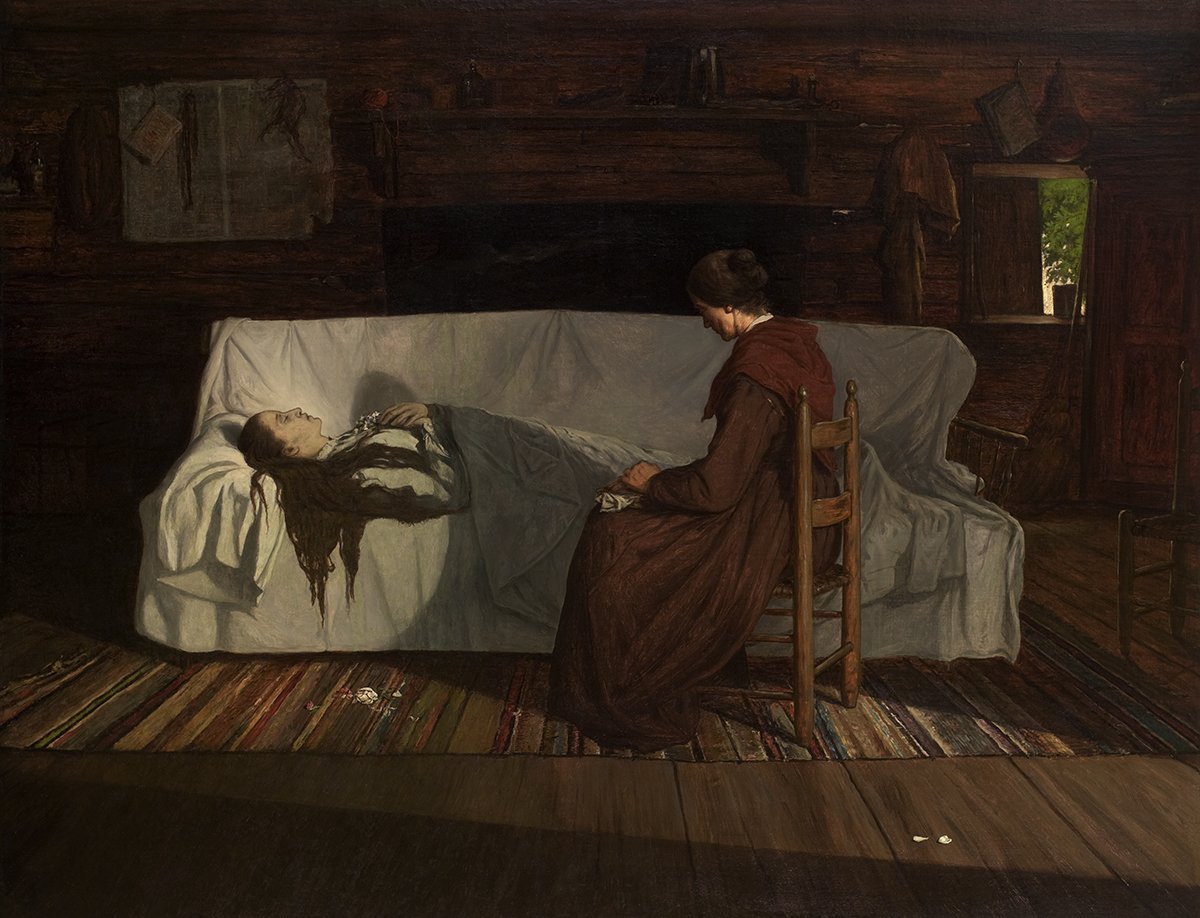
Thomas Noble (1835– 1907), Forgiven, circa 1872, oil on canvas, 50 1/8 x 65 inches. Image courtesy of The Johnson Collection, Spartanburg, South Carolina

Thomas Noble (1835– 1907), Forgiven, circa 1872, oil on canvas, 50 1/8 x 65 inches. Image courtesy of The Johnson Collection, Spartanburg, South Carolina

Southern Gothic: Literary Intersections with Art from the Johnson Collection

on view October 1, 2026–January 3, 2027

This fall the LSU Museum of Art presents Southern Gothic: Literary Intersections with Art from The Johnson Collection. Drawing from the celebrated holdings of The Johnson Collection in Spartanburg, South Carolina, this exhibition explores how visual artists have grappled with the American South’s layered history through a lens long cultivated in Southern literature.

Originally curated as a collaboration between The Johnson Collection and Wofford College, also in Spartanburg, the show examines how nineteenth- and twentieth-century artists employed potent visual language to transcribe the tensions between the South’s idyllic aura and its historical realities. Using Southern Gothic literary traditions as inspiration, the grouping considers how artists translate into visual form the same tensions found in the writings of William Faulkner, Flannery O'Connor, Tennessee Williams, and Toni Morrison. Often described as a mood rather than a strict genre, Southern Gothic blends elements of horror, romance, decay, spirituality, and dark humor. In painting, printmaking, and sculpture, these sensibilities emerge as evocative landscapes, charged domestic interiors, allegorical scenes, stereotypical antebellum imagery, and portraits that hint at psychological depth and social complexity.

The core group of artworks has been expanded to engage Louisiana’s distinctive cultural environments, layered histories, and enduring traditions. Objects from The Johnson Collection are placed in conversation with selections from LSUMOA’s permanent collection and significant loans from the Louisiana State Museums system, the Newcomb Art Museum at Tulane University, the renowned Roger Houston Ogden Collection, and art collector Jeremy Simien. This expanded framework creates a dynamic dialogue between regional voices and the broader scope of Southern art history. Together, the objects illuminate how artists have negotiated myth and memory, confronting the South’s romanticized imagery alongside its difficult and often contradictory realities.

Founded in 2002, The Johnson Collection has grown into a distinguished holding of more than 1,400 objects spanning multiple centuries that trace the cultural evolution of the American South. The organization champions the pivotal role Southern art plays within the national narrative and is dedicated to elevating historically under-recognized voices through thoughtfully curated publications and exhibitions that continually reassess and expand the story of Southern art.


Sponsor an Exhibition

Your support helps the LSU Museum of Art bring extraordinary exhibitions and meaningful educational experiences to our community. Contributions directly support exhibition-related expenses, including artwork loans, transportation, installation, educational programming, interpretive materials, and public engagement initiatives. Because each exhibition carries unique costs and opportunities, sponsorships play a vital role in making world-class art accessible to audiences throughout Baton Rouge and the Gulf Coast region.